The digital workplace: A strategic component of an employee value proposition

Dear Diary
During a recent DWG Research Spotlight, we had a fascinating conversation about the fact that many organizations don’t think about the digital workplace as a strategic component of the employee value proposition.
This conversation led me to my ponderable of the day:
Is the digital workplace the key to enhancing your employee value proposition?
The digital workplace has emerged as a pivotal element in shaping the ‘employee experience’. As organizations strive to attract and retain top talent, it is imperative to fully recognize the digital workplace’s rightful place as a strategic part of the employee value proposition (EVP).
Understanding the digital workplace
The digital workplace is not just about technology; it is about creating an environment where employees can connect, thrive and contribute to the success of their organization, regardless of location. This makes it the digital twin of the enterprise HQ.
Extending the thought: The digital twin for the physical HQ also has a front door, which for most organizations is the intranet. Once inside, other doors open into rooms and spaces designated for thinking, planning, doing, collaborating, innovating, learning and more. The design aesthetic reflects the organization’s culture, values and ways of working.
The role of the digital workplace in EVP
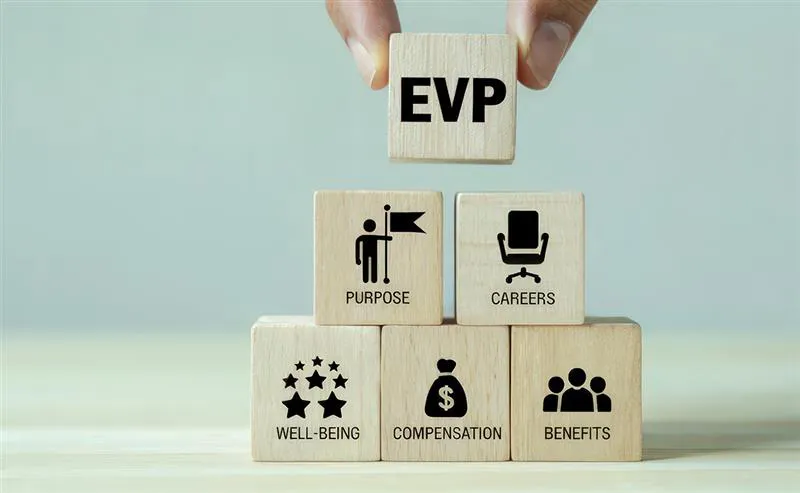
The employee value proposition is the unique set of benefits and experiences that an organization offers to its employees in exchange for their skills, capabilities and contributions. Traditionally, EVP has focused on aspects such as compensation, benefits, career development and work–life balance. However, in the digital age, the digital workplace has become a critical component of EVP. Here are some key reasons why:
- Enhanced employee experience: A well-designed digital workplace enhances the overall employee experience by providing the tools and resources needed to perform tasks efficiently. It reduces friction, improves communication and fosters collaboration, leading to higher job satisfaction and engagement.
- Flexibility and remote work: The digital workplace enables flexibility and supports remote work, which has become increasingly important in the wake of the COVID-19 pandemic. Employees value the ability to work from anywhere, and a robust digital workplace makes this possible.
- Attracting top talent: In a competitive job market, organizations that offer a modern and efficient digital workplace are more likely to attract top talent. Prospective employees are drawn to companies that invest in technology and provide a seamless digital experience.
- Retention and loyalty: A positive digital workplace experience contributes to employee retention and loyalty. When employees have access to the right tools and technologies, they are more likely to stay with the organization and contribute to its long-term success.
Integrating the digital workplace into an EVP
To effectively integrate the digital workplace into the employee value proposition, organizations need to adopt a strategic approach. Here are some key considerations:
- Align with organizational goals: The digital workplace strategy should align with the overall goals and objectives of the organization. It should support the company’s vision, mission and values, while contributing to its competitive advantage.
- Focus on employee needs: Understanding the needs and preferences of employees is crucial. Organizations should gather feedback, conduct surveys, undertake usability testing and engage in open dialogues to identify the digital tools and resources that employees value the most.
- Invest in technology: Investing in the right technology is essential for creating an effective digital workplace. This includes collaboration platforms, communication tools, workflow integration tools, project management software and other digital resources that enhance productivity and engagement.
- Provide training and support: To maximize the benefits of the digital workplace, organizations should provide training and support to employees. This ensures that employees are proficient in using digital tools and can leverage them to their full potential.
- Foster a digital culture: A successful digital workplace requires a culture that embraces technology and innovation. Organizations should promote a digital mindset, encourage experimentation and recognize employees who contribute to new ways of working that create the digital transformation WOW factor.
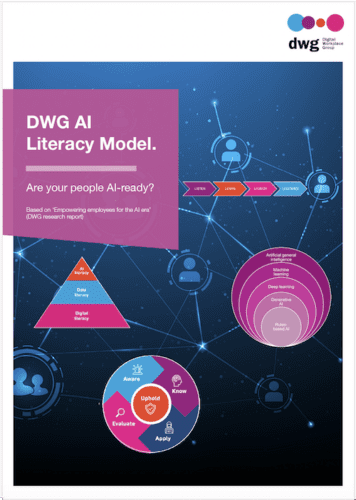
An example: Integrating AI in the digital workplace.
Reflecting back on that recent DWG Research Spotlight, the session highlighted the importance of integrating AI in the digital workplace. Event Host and Member Adviser Andrea Brant stressed the importance of connecting AI readiness with the digital workplace to ease friction and up-level the employee experience. This is a prime example of how organizations can leverage advanced technologies to enhance their digital workplace.
AI can be used to automate routine tasks, provide personalized recommendations and improve decision-making processes. By integrating AI into the digital workplace, organizations can create a more efficient and productive work environment. However, it is important to ensure that employees are comfortable with AI and understand its benefits. Providing training and addressing any concerns related to AI can help in achieving this.
Challenges and solutions
While the digital workplace offers numerous benefits, it also presents certain challenges. Organizations need to address these challenges to create a successful digital workplace:
- Technology adoption: Employees may resist adopting new technologies due to lack of familiarity or fear of change. To overcome this, organizations should provide comprehensive training and support and communicate the benefits of the digital workplace.
- Security and privacy: With the increasing use of digital tools, ensuring data security and data privacy is paramount. Organizations should implement robust security measures and educate employees about best practices for data protection.
- Digital overload: The abundance of digital tools can sometimes lead to digital overload, where employees feel overwhelmed by the number of applications they need to use. To mitigate this, organizations should streamline their digital tools and ensure they are user-friendly and integrated.
- Maintaining human connection: While the digital workplace facilitates remote work, it is important to maintain human connection and foster a sense of community. Organizations should encourage virtual team-building activities, regular check-ins and opportunities for social interaction.
Taking a step back
As the business landscape continues to evolve, organizations must stay ahead of the curve by embracing digital transformation and leveraging the digital workplace as a strategic asset. By doing so, they can create a compelling employee value proposition that attracts top talent, fosters loyalty and drives long-term success.
Ask yourself.
I find that the best way for me to translate concept into practice is to frame up some questions to instigate strategic thinking. So here are some questions to ask of yourself and your stakeholders:
- Is our digital workplace the key to enhancing our employee value proposition (EVP)?
- How well does our digital workplace align with our organizational goals and objectives?
- Are we effectively addressing our employees’ work needs and preferences in our digital workplace strategy?
- Are we investing in the right technology to enhance productivity and engagement in our digital workplace?
- Do we provide adequate training and support to ensure employees can leverage digital tools to their full potential?
- How can we foster a digital culture that embraces technology and innovation?
- Are we integrating advanced technologies like AI to enhance our digital workplace as a way of easing friction for employees?
- What challenges are we facing in our digital workplace, and how can we address them effectively?
Then what?
Finally, choose your path:
Door #1: If you are struggling to solve any of these questions, don’t journey alone. Ask DWG.
Door #2: By contrast, if you have green lights all the way, why not share your story on an upcoming episode of Digital Workplace Impact podcast?
Door #3: If you just want to stay connected with this series, subscribe to Diary of a She-E-O to get an electronic tap each time a new edition drops.
Categorised in: → Diary of a She-E-O, Business leadership