Enquire about consultancy
Book a free one-to-one consultation to review the current state of your digital workplace and discover how DWG expert guidance can help you move forward with confidence.
What does it really take to make AI work at scale inside large organizations? In this episode of Digital Workplace Impact, DWG Chief Executive Nancy Goebel sits down with Melissa Reeve, author of Hyperadaptive: Rewiring the enterprise to become AI‑native, to explore why so many AI initiatives stall – and what leaders must do differently to achieve lasting impact.
Empowering employees for the AI era: A guide to AI upskilling
Designing AI literacy programmes that stick: Empowering future innovators
Organizational readiness: What digital workplace teams need to know
What does it really take to make AI work at scale inside large organizations? In this episode of Digital Workplace Impact, DWG Chief Executive Nancy Goebel sits down with Melissa Reeve, author of Hyperadaptive: Rewiring the enterprise to become AI‑native, to explore why so many AI initiatives stall – and what leaders must do differently to achieve lasting impact.
Drawing on her background in Lean, Agile and DevOps thought leadership, Melissa argues that AI represents not just a technology shift but a fundamental rewiring of the operating model. She introduces the concept of the ‘hyperadaptive’ organization – one that can sense and respond in near real time by compressing decision‑making, workflows and governance. Crucially, becoming AI‑native is as much about people, culture and leadership as it is about tools.
The conversation unpacks the difference between being merely AI-enabled and more fundamentally AI‑native, moving on to consider why rushing to automate without foundations erodes trust and how leaders can take a deliberate, staged approach to change. Melissa shares her practical five‑stage Hyperadaptive Model, explains why dynamic governance and AI literacy matter more than pilots, and offers a compelling case for investing in new roles and learning systems such as AI activation hubs.
Including encouraging job predictions from the World Economic Forum and a positive real-world example of AI in use at Moderna, this episode challenges leaders to calm the hype, think systemically and reframe AI as a long‑term capability. For anyone responsible for digital workplace strategy, employee experience or enterprise transformation, it’s an essential and uplifting listen.
Episode 168: Hyperadaptive – Rewiring organizations to become AI-native
“So, you’ve invested in the licences, you’re probably building some AI solutions. Now invest in the humans and the structures you need to support those humans. So, I like to use the analogy of the PC in the 1990s. When we put a PC on everybody’s desk, we didn’t just put it there and say, ‘Go have fun, go play with it.’ Nobody would have known what to do! What we did is we started to spin up IT help desks; we put entire IT departments in place in support of this new technology. And we really need to start funding the people, the processes and the roles, so that people can integrate AI into their day to day. And as we raise that AI literacy, we’re able to leverage the AI solutions more, especially from things like generative AI. But even if you were building an in-house custom solution, your business counterparts would be much more literate and aware of not only the capabilities of AI, but the boundaries of AI.”
Melissa Reeve
Author of Hyperadaptive: Rewiring the enterprise to become AI-native
Nancy Goebel
Welcome to Digital Workplace Impact. Today we’re talking about what it really takes to make AI work in the real world, inside of organizations – with real terms, real incentives, real constraints.
My guest is Melissa Reeve, and she’s the author of a brand-new book called Hyperadaptive: Rewiring the enterprise to become AI-native. The book is essentially a playbook for leaders who are moving beyond pilots and proofs of concept and are ready to integrate AI into how the organization actually operates. What I appreciate about Hyperadaptive is that it’s as much about humans as it is about technology. It looks at leadership decisions, culture, operating models, day-to-day changes, all of which in combination add up to becoming truly AI-native. And in this conversation, we’ll unpack what hyperadaptive means, why so many AI efforts stall when it’s time to scale and sometimes even fail. And, of course, what leaders can do now to build conditions for sustainable impact.
This is Nancy Goebel, your host and DWG’s Chief Executive. Digital Workplace Impact is brought to you by Digital Workplace Group. Join me now in conversation with Melissa Reeve. Happy listening!
Melissa, welcome to the Digital Workplace Impact podcast studio. I have to say, I’m gearing up for DWG’s summer reading list and it felt like such a great time to tee up this conversation, not only to congratulate you on a new book, but also to help build up a robust summer reading list.
Your book is entitled Hyperadaptive: Rewiring the enterprise to become AI-native. And boy, does that feel like a timely read! So, welcome, welcome.
Melissa Reeve
Thank you so much for having me on the show. It’s a pleasure to be here.
Nancy
And we’re excited to be part of your book tour activities and certainly hope that this will help give you some added play. And then, of course, for our audience, some great insights that they can sample through this conversation and then click down, so to speak, on additional insights through the book itself. And having had a nice glimpse of it, it seems to be a really practical playbook for leaders who are past the point of pilots and proofs of concept and are really thinking about AI and integrating it into ways of working in a way that actually work. And so, before we unpack this playbook together, I’d love for you to share a little bit about what inspired you to sit down and write this book. Why now?
Melissa
Sure. I like to say that my journey to this podcast started on the factory floor of Toyota – actually, Hino Motor Companies in Tokyo. It was there that I was studying the Toyota production system – and that has roots in Lean. And even though I had 25 years as an executive in various small and medium-sized companies, I was always working with large organizations. So I have roots in Lean… and then Agile came along and I started to think about Agile… and DevOps came along and I started to think about DevOps. And when AI hit, for some reason I had this lightning-bolt moment where I thought about the automation of – at the time I was calling them execution pipelines – where AI was going to automate entire workflows. And I thought to myself, where have we seen that before? And DevOps clicked in. I thought that was the automation of the software delivery pipeline. And so, I revisited the DevOps handbook. I re-read it cover to cover, taking copious notes, thinking about the shift of jobs that happened when DevOps took hold. I took a look at things like factory automation; I did deep research on organizations that had a headstart with AI; and then I combined it with things like Peter Senge and John Cotter and Clayton Christensen.
I just had that all simmering in my brain – and then the subconscious must have been doing its thing, because I woke up at December 15th, 2024 at 2.00 in the morning and I was rummaging around in my closet looking for index cards and I just started scribbling notes. And I ended up – eventually I moved into Microsoft Word – I ended up with this 133-page outline. And I thought, ‘Oh, there a book waiting to be born.’
Nancy
What a terrific origin story.’ And, of course, you put out the idea of ‘hyperadaptive’ in the title of this book. And for those who may not yet think about this as part of a new dynamic, what does that look like in practical terms, whether it’s in the form of behaviours or decisions or observable ways of working?
Melissa
Sure. So, I like to say that most organizations, especially large organizations, are what I call linear organizations. You have strategy to execution, you have concept to delivery. And there’s a lot of handoffs and delays as you’re making your way through the hierarchy, as you’re handing it off from an idea all the way into delivery. What I saw – again, let’s talk about DevOps – is this compression effect.
So, when you think about the release of software – and I know not everybody in the audience is software or is an IT professional – but you don’t have to be to understand these concepts. When we used to talk about the delivery of software, you used to have a software developer, who handed it off to a tester, who handed it off to production – and you might release anywhere from two times a year to two times a month, but not very frequently. But when you have that compression effect, then leading organizations like Amazon are deploying 23,000 times a day. And so you see, thatt’s an order of magnitude more quick than traditional processes.
And I believe that AI is going to enable that type of compression and that type of responsiveness for organizations. So, a hyperadaptive organization is one that’s able to sense and respond in near real time based on the information coming in. And they’ve got their processes so fluid that it just feels like it’s a natural part of organizational breathing.
Nancy
Well, I think it’s always important to have grounding points like this, especially given the fact that there is a step-change that’s happening in the world of the enterprise organization embracing AI. And one of the things you do quite eloquently is draw a line between being AI-enabled and AI-native. Let’s talk a little bit about the differences between the two. And, of course, some organizations are talking about AI-first in the mix as well. How can a leader tell which one they are today in addition to drawing those lines?
Melissa
Yeah, so what I’ve learned from my background in transformation and organizational transformation work is it doesn’t happen overnight. And so, when you think about what we’ve just described – this journey from becoming a linear organization into a hyperadaptive organization – you’ve got to take it iteratively and incrementally. The aircraft carrier doesn’t turn on a dime!
And so, AI-enabled is in the beginning of what I call the ‘Hyperadaptive Model’, which is a five-stage model to get you from this linear organization into more of an AI-native/hyperadaptive stance. What that starts to look like is, in the beginning, you’re thinking about governance, you might be spinning up an AI Council, you might be appointing AI leads. What I’d encourage your listeners to think about is, ‘Do we have dynamic governance – dynamic AI councils at multiple levels in the organization?’ Because we need that type of dynamic governance to keep up with AI. And then, if you’ve appointed AI leads, have you just anointed them in name only, or are you providing them with programmatic support so that they can spread their knowledge throughout the organization? And that starts to move the organization from zero to the beginning of AI-enabled.
From there, we start to inject AI into the workflows. Again, that feels more AI-enabled. By the end of stage five, what we have is we’ve actually moved most of the silos and functional hierarchy into value streams, and we’ve got orchestrated value streams – so there’s significant rewiring that happens in stages three and four to become AI-native.
And I wanted to lay that out for your listeners because truly AI-native companies – if you were starting a company right now from scratch, you would most likely organize it in this new operating model, in these orchestrated value streams. You would have workflows already automated; you would be organizing around value versus organizing around function. And so, if you’re a large organization, you need to be aware that those truly AI-native companies – it’s going to be just like the digital-native companies put a lot of pressure on the enterprises when they sprung up. The same thing I anticipate is going happen. And that’s the challenge of leadership for our enterprise leaders today.
Nancy
So that’s clearly a major challenge. I would imagine that you have seen a plethora of AI initiatives that have failed or stalled, whether it’s because of the growing pains of this shift that needs to happen, and the new types of competition that are in play, but equally, potentially, as organizations are making a shift from, say, rolling pilots and proofs of concept to now trying to drive at scale. So, what are some of the biggest factors in your experience around failures or stalling that people should have in their line of sight?
Melissa
Yeah, I think if there were one takeaway for your listeners, it would be… you’ve invested in the technology. So, you’ve invested in the licences, you’re probably building some AI solutions. Now invest in the humans and the structures you need to support those humans. So, I like to use the analogy of the PC in the 1990s. When we put a PC on everybody’s desk, we didn’t just put it there and say, ‘Go have fun, go play with it.’ Nobody would have known what to do! What we did is we started to spin up IT help desks; we put entire IT departments in place in support of this new technology. And we really need to start funding the people, the processes and the roles, so that people can integrate AI into their day to day. And as we raise that AI literacy, we’re able to leverage the AI solutions more, especially from things like generative AI. But even if you were building an in-house custom solution, your business counterparts would be much more literate and aware of not only the capabilities of AI, but the boundaries of AI.
I often see organizations trying to rush ahead into what I outline as the stage four, stage five, which is these big, automated workflows, and they haven’t laid the foundation within their organization. So, either they build something that people don’t use, or they build something that doesn’t meet the business requirements, or they try and bite off more than they can chew, and they grind through political capital and budget money, and people get cynical about AI’s capabilities. So, if there’s one word that I could embed in the listener’s mind, it would be ‘deliberate’. Be deliberate in rollout, be deliberate in your AI initiatives, take your time. I know there’s a ton of pressure out there, but it’s like in sailing, when you let off a little bit, you go faster than trying to go directly into the headwind.
Nancy
Yeah, I am often heard saying, ‘Sometimes you have to go slow to go fast.’ And when you’re trying to change behaviour, that is something that requires time and care. It’s about building both confidence and competency. And certainly, you know, we talk with our members about the fact that enterprise results with AI come from balancing both people readiness and organizational readiness in parallel. And certainly investing in building literacy and putting the support systems in play is very much a factor, but also thinking about how leadership needs to change at a time when teams are starting to have a new definition because you have people and agents working alongside each other now and the whole birth of ‘vibe working’ as part of that dynamic.
When you see that scaling starts to get hard, what do you think tends to break first? Is it the governance? Is it the roles? Is it the data foundations? Culture? What are you saying?
Melissa
So, I don’t know that it’s any one of those things. Where I think organizations fall down is not recognizing that this change, AI, represents an organizational transformation – and I know that word gets overused, but I think it really is a reinvention of the operating model. And, if you look at AI through that lens, you realize you’re going to need to think about things like: How do we budget? How does budgeting change? We talked a little bit about governance and how governance has to change from this static document that lives out on the intranet to a much more dynamic form of governance. We have to think about the roles. How are we going to rewire those roles again and again and again?
For example, I spin up in the model something called the ‘AI Impact Hub’. And that’s a network of hubs in the organization that coordinate to figure out, ‘How do we upskill our people on an ongoing basis, and how do their roles change as they move from doing the task to building, monitoring and maintaining the automations that do the task?’.
So the World Economic Forum anticipates if you have 100 jobs – well, first of all, they say 72 million jobs are going away, 98 million jobs will be created. So that’s net new jobs that are being created. And they say, if you have 100 people, only 11 of those people will not make the cut; they will not have the aptitudes to make that transition from those 72 jobs – the 72 million jobs that went away to the 98 million. So that means, if you are an organization, you’ve got 89 people in your organization whose jobs are going to change. How are you going to manage that?
So, we’ve talked about budgeting, we talked about governance, we talked about role evolution, you mentioned culture. And this is an area I feel organizations are not getting right. I highly encourage organizations to set what I call an ‘AI North Star’, which is: Why are you using AI? What are you trying to achieve?
And instead, we’ve got a lot of toxicity around the messaging, meaning that they’re saying, ‘We want productivity. We’re hyperfocused around productivity.’ So people are scared for their jobs. They’re not painting this picture of what could be.
And I want to give your listeners an example of somebody who does that right, which is Moderna. Moderna has set their AI North Star to be, ‘We’re going to release 15 new drugs in five years – with the help of AI.’ And if you know anything about pharmaceuticals, you know that it usually takes 10 years to release one new drug to market. So that’s what I mean by anchoring your culture in an AI North Star that not only organizes everybody so they’re not doing these random acts of AI but really gives them a sense of purpose around AI. And I know that’s a long answer to your question but I really want your listeners to start thinking broader than any one factor and start thinking about the system.
Nancy
And to be purposeful and intentional as part of this new paradigm, it’s the most critical grounding point. So, bringing a living example like Moderna to life is a really helpful illustration of the power of cutting through to that specific purpose. And when you start to think of all of the things that are anchored around that – up to and including what are the things that are friction points in the employees’ experience that are taking away from the ability to work in support of that direction – I know it starts creating lots of questions for me about how organizations need to align, not only what happens and AI vis-a-vis the customer experience, but certainly looking at the employee experience broadly. And then also doubling down on the leadership experience as stewards and architects of these changes that are unfolding right before us.
As you start to think about where we’re going next and articulating a vision for what good looks like, what would you say are some of the most important words of advice that you can share, particularly with those who are responsible for the digital workplaces inside of their organizations, as a way of helping us start to really bring this set of ideas, this playbook, together?
Melissa
I think it’s important for leaders to recognize this isn’t going to happen on its own. Just like if you were chasing something like Agile or DevOps or Lean, that doesn’t install itself. And so, you need to really think about how you’re going to manage the people, the processes, the roles in your organization for that employee experience, for the digital workplace. And I advocate for spinning up things like the ‘AI Activation Hub’. And this is a network of hubs in your organization. Think of it as a supercharged centre of excellence. But they’re the ones who are monitoring AI for its latest developments. And let’s just say that you are on Copilot and they’ve just released Cowork within Copilot. It would be the responsibility of this AI Activation Hub to understand the implication for – let’s just say there’s one in Legal; here’s what it means for everybody in Legal. And then they would also do what I call atomizing the learning. So, they take the most recent advancement, they atomize it, they send it down to the AI leads, who get it into the hands of the practitioners. And why I’m getting this so granular is because I want your listeners to visualize what I call the ‘AI Learning Flywheel’, which is an always-on flywheel where you have information coming into the activation hubs, going through to the AI leads and going down or over into the practitioners. And this now creates a much more solid employee experience because people know who’s doing what and you’ve got a system to manage it. Not everybody in your organization has to keep on top of AI developments. We have a place for that to happen. We have a place for these best practices to be exchanged. We have a system for delivering them into the hands of the organization without firing up AI training every other week. And I want them to really think differently about this installation of a new type of system to keep the organization updating itself. This has its roots in Peter Senge and the ‘Learning Organization’, creating learning organizations. And we just never had the technology and operational know-how to really put it in place in a meaningful way.
Nancy
One of the things that I talked about in my predictions for 2026 was that the idea of micro-strategies would really help to spur the flywheel of change. And here you are talking about this very flywheel! And so, these hubs that you’re talking about will help employees cut through to what matters most for them. And in an age of ‘infobesity’, helping to put those support systems in place feels quite important. So that is certainly a takeaway from this conversation.
Are there any other things that you think that over the next 30, 60, 90 days, leaders should be focused on as we continue working through this cycle of change acceleration?
Melissa
One, if you aren’t already: Educate yourself. Educate yourself on the power of AI, the limits of AI. See if you can do it organizationally. Right now, I see a lot of individuals – leaders – who are empowering themselves, and we’ve got what I call the ‘bifurcation problem’. So, we’ve got a handful of people who are power-users with AI, even at the leadership level – and we’ve got everybody else. And if you can organizationally recognize we need to raise the literacy of everybody at the leadership level, you’ll be making stronger decisions about AI.
The second thing I’d advise leaders to do is bring down the temperature. There is so much hype around jobs going away and roles going away, and I need leaders to hear it’s ‘Yes and’. You heard me talk about the World Economic Forum, the shift in jobs. You’ve got wonderful people that you’ve hired. You need to be figuring out a plan to help them transition, like I said, from doing the thing to building, monitoring and maintaining the thing. This is a proven pattern. Everything from washing machines, right? We’re no longer washing our laundry by hand, but we built these wonderful machines to do it. And then we built factories around that and maintenance around that. This is a proven pattern. So bring down the temperature; raise your AI literacy.
And then the third thing is really thinking about how you’re going to install a system to support AI in your organization.
Nancy
I’m just thinking about how we tie this conversation all together with a bow. What’s one question you wish more leaders would ask themselves right now about becoming AI-native enterprises?
Melissa
How can I do it gradually? I don’t think we’re going to boil the ocean overnight and it’s not going to serve your organization to press on the gas too hard. I know that feels like an unrealistic request. We’ve all been there. And so, when we’ve been there, there’s always some short things you can do and longer-term things you can do. And in the book, I mention Microsoft and Satya Nadella, and how when he was reinventing Microsoft and the culture there, the patience he asked for from Wall Street as he was reinventing it and really laying out – and your listeners might not have to deal with Wall Street, but we all have a boss that we need to temper expectations around – and really helping them understand here’s some short-term wins we can achieve and here’s where we’re going long-term.
Nancy
Well, ultimately, this is a marathon, and so this idea of taking a breath, making sure you’re purposeful, establishing this idea of continuous learning – but also taking short steps one at a time to carry you through that marathon – all in combination are important.
I guess my final question for you, Melissa, is what have we missed? Is there anything you are hoping to share from your book that we haven’t?
Melissa
This isn’t necessarily from the book, but I think it’s important for people to lock in that AI is easy to use and not necessarily easy to learn. And the analogy that I use is a piano. Anybody can walk up to a piano and start hitting keys and yet it takes a lifetime to become a master concert pianist. So I think we’ve got to also temper our expectations around how fast and how far people can get on their own by just hitting the keys of AI. And, you know, I can’t say it enough, give our people the support they need to at least learn a few songs with AI!
I also like to say that AI learning is social learning – so create those learning arenas where people can exchange best practices with each other, use cases with each other, and ensure people have the capacity to do that type of learning.
Nancy
That’s a perfect way to cap off our conversation together – and I’m going to be thinking about pianos for the rest of today. That’s a very powerful metaphor!
Melissa, we wish you every success with your book tour. We appreciate that you took some time out of your day to share some of your insights. And we look forward to following your thinking as your own experience, both as a professional and as a thought leader, continue to unfold.
Melissa
Thanks so much. I appreciate your having me on the show today, Nancy.
Nancy
Digital Workplace Impact is brought to you by the Digital Workplace Group. DWG is a strategic partner covering all aspects of the evolving digital workplace industry, not only through membership, but also benchmarking and boutique consulting services.
For more information, visit digitalworkplacegroup.com.

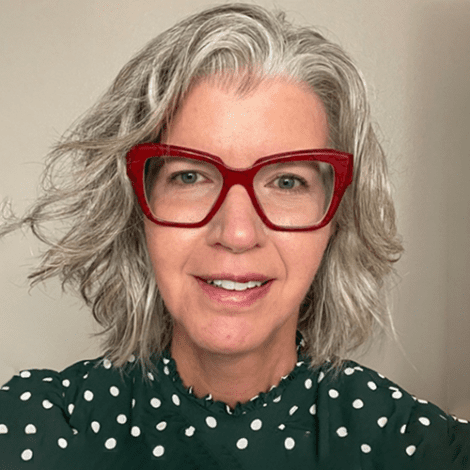
“If there were one takeaway, it would be: you’ve invested in the technology, now invest in the humans and the structures to support them. AI doesn’t install itself. Leaders need to deliberately fund the roles, governance and learning systems that allow people to integrate AI into their day‑to‑day work.”
Author of ‘Hyperadaptive: Rewiring the enterprise to become AI-native’
Contact us to apply to join DWG as a member and become part of a community of more than 900 digital workplace and intranet leaders and practitioners.
Apply for membershipBook a free one-to-one consultation to review the current state of your digital workplace and discover how DWG expert guidance can help you move forward with confidence.