Enquire about consultancy
Book a free one-to-one consultation to review the current state of your digital workplace and discover how DWG expert guidance can help you move forward with confidence.
In this episode, we delve into the role of Digital Employee Experience, or DEX for short, at one of Fortune's 100 Best Companies to Work for, Robert Half.
Join us and delve into the role of digital employee experience (or DEX) at Robert Half, one of Fortune’s 100 Best Companies to Work For.
Evelyn Lim, Senior Director, Digital Workplace Colleague Experience at Robert Half, joins Nancy Goebel in the studio. By fostering a culture of innovation and collaboration, Evelyn and a global team of Robert Half colleagues are working cross-functionally to set the standard for what it means to be an employer of choice in the digital age.
Evelyn describes their approach as ‘agile-ish’ and this is underpinned by her own passion and focus for supporting and enabling the digital employee experience. In their discussion, Evelyn reveals her perspective on why DEX is so important, and the parts personification and accessibility play for colleagues based around the globe.
The pair also talk about how input from colleagues is the air that fuels the digital employee experience. What shines through is the power of the DEX collective; a testament to Robert Half's commitment to the wellbeing and success of its employees, and to the company’s high standing as an employer of choice.
Join Nancy and Evelyn to find out more.
There’s always something more, something new to tackle. But even looking back, and I have this great graphic now that I show, here’s how the journey of the intranet has come since 1998, and it looks very transformative and so it’s great to look back on. And even when we have made one-degrees shifts, we’ve made little changes, it’s all added up to something big.
Welcome to another exciting episode of Digital Workplace Impact. In this episode, we delve into the role of Digital Employee Experience, or DEX for short, at one of Fortune’s 100 Best Companies to Work for, Robert Half. Joining me in the studio is Evelyn Lim, who is a Senior Director of Digital Workplace Colleague Experience. And Evelyn is someone I’ve known, admired, and enjoyed collaborating with for many years at this point. And I can tell you that not only in practice, but also in this conversation, you will come to see that by fostering a culture of innovation and collaboration, Evelyn, along with a global team of colleagues, have been working cross-functionally to set the standard for what it means to be an employer of choice in the digital age. Their approach may be agile-ish, but the power of the DEX collective is a testament to Robert Halfs’ commitment to their employees’ well-being and success, and high standing as an employer of choice. Digital Workplace Impact is brought to you by Digital Workplace Group. This is Nancy Goebel, your host and chief executive at DWG. Join me now in conversation with Evelyn. Happy listening.
Evelyn, I am just so glad that we’ve had a chance to reconnect and arrange some time to come into the studio and have a chat.
I know there has been so much going on in your orbit and wanted to have a chance to dip into that world with you and benefit from your wisdom, your learnings, your insights. And so thank you so much for taking a pause from a busy work day and coming into the studio to chat with me.
Thanks for having me. I always love our chats. I feel like you and I don’t connect for a couple of months, but every time we do, it’s like old friends again. So I always love chatting.
Well, thank you. I feel the same. And of course, the fact that you work for an organization, Robert Half, and it is an organization that has had industry accolades over the years as an employer of choice, most recently having been named once again a Fortune 100 best company to work for, it felt like an apropos time to talk a little bit about how the employee experience and employee engagement play a role in Robert Half and its employer of choice story. So if that works for you, I would love to make that the anchor point for this conversation.
Absolutely. The employees are always near and dear to my heart, so I always love talking about it.
Wonderful. And so as long as we’ve known each other, the idea of supporting and enabling the digital employee experience has been your passion, your focus. And I’d love to get your perspective on why it is so important to you, and of course, the wider leadership at Robert Half.
Employees are just accessible, right? That’s my customer. That’s who uses our product. And I feel like I can see what we put into the digital employee experience. We can see the impact of that. I can tap people on the shoulder very easily and be like, Hey, what did you think of this? Or, How is it going? How else can we help you? What are new features that we can bring in? It’s a little harder when it’s the general public. We have our external websites, too, and they definitely have target audience. But what’s near and dear to me is I’ve formed many friendships over there. I’m about to be hitting my 19 years of tenure at Robert Half here. So many coworkers have turned to personal friends, and I know I can tap and say, What would help you improve your day? What can we bring? And as an employee, there’s so many things that they have to do in the digital employee experience world. It’s always very insightful to me and keeps me hungry of continuing to want to innovate and bring new features to the folks that we have at Robert Half.
Well, that certainly makes the connection special and rewarding all at the same time because you have a clear view of the impact that’s being achieved in conversation with your colleagues and friends. And that’s a wonderful thing. And I hope we can get a bit more concrete about what that looks like. Have there been any particularly successful or innovative elements of the Digital Employee Experience program or even the wider digital workplace that have helped support either this fortune win or the notion that Robert Half is an employer of choice story?
When we got together with the very first evolution of iteration of our intranet, it was very forms and announcement driven. Here’s a link. Here’s a link to download a paper form. Please print it out, fill it out, and fax it back to us. Times have changed, and we continually ask employees, and we keep our eyes and ears open, Okay, what are other departments doing, and what can we bring in into that experience? We are a global company. Somebody that sits in UK has different needs than somebody sitting in US versus Asia. We take that very near and dear to our hearts because we know, again, personification is important, but then accessibility is also important, too. For many years, we had targeted a lot of content. If you’re a UK employee, you get all of this UK content. But that has even since changed. We now have managers in one country that have employees in a different country, and they need to be able to get to that information to support the employees in the other country. So even with that shift in that globalization, we’ve changed architecture of our intranet to accommodate that. We’re opening it up, so I always call it, you can digitally travel to any country we have behind the scenes.
You can check it out. It’s our responsibility to make sure that you know where are you standing in. So let’s make it visible from a design perspective, which country version of our intranet you’re there. And then you get the relevant search results, you get the content, because, again, everybody in different points of time is wearing a different hat. They’re coming to the intranet for a different use case. And so it’s not very cut and dry where if you came to our external website, you’re either a client or a candidate looking for somebody to fulfill a job or you’re seeking a job. When you come to our intranet, you could be looking for adoption assistance. You could be building a new wellness program that is supporting somebody in other country. I always tell everybody, it’s on my roadmap at some point that we’re going to scan your retina and we’re going to know which hat you’re wearing and looking for what content. But until then, we’re just going to make it accessible so that you have the choice to go seek the information that you’re looking for.
And so in the early humble days, the metaphor sounds a lot like a newspaper of old with classified ads to get access to different services and fill out forms and things. And now this is a much more holistic experience where the world of Robert Half has gotten larger and smaller all at the same time. Larger in the global sense, smaller in the personalization.
Indeed. And we just have so many partners throughout the company that have their SaaS app. It’s not one that serves all, but I see that our intranets help you get to the right place. And it should be seamless to you as an employee. You shouldn’t need to know the 65 different applications we have around. You should be able to say, I’m looking to log some PTO. Where do I go? I’m looking for some benefit information. And then do we get you to the right spot? And so that’s a lot of integration that I keep my eye out on. I listen to what’s happening around the business, and I always say, Hey, is there an opportunity here that we can partner up? Maybe we can turn this into a more seamless experience for the employees. That’s my thing that keeps me going. And as I like knocking on doors, be like, What’s going on in your world? Is there a partnership that we can uncover? And really stems off of a very solid partnership I have internally already of keeping the intranet going. My team is called the Digital Workplace Team, and we’re really taking care of the front-end of all the codes and maintenance and content updates.
We partner very closely with the UX team, where we have UX design, research, and architecture built in, dedicated to supporting the employee experience. And then we also have a tech team, a web dev team that is fully dedicated to this product as well. So I’m very grateful that the senior leadership supports that, to have that dedication of resources so that we can continue expanding that employee experience.
Well, it’s a powerful agenda. I know that we’ve both come across a whole host of studies over time that show that improving decks or the digital employee experience can lead to not only employee productivity gains, but things like improved engagement, and even a better feeling of what it is to experience being an employee inside of an organization, i. E, the sentiment. And so that combination can have not only, I’d say, a positive knock-on effect on attractiveness as an employer of choice, but also help support retention. Tell us a little bit about how you’ve seen this play out at Robert Half.
It’s always reminded to us that it’s top of mind. Every mission and vision statement that I see coming up from our executives, it always lands with to benefit our clients, candidates, and colleagues. And I think that just speaks monumentously to say we are just as important, our own employees are just as important to have a good experience as our client and candidates. And if we can make it a better experience for our employees, think about the six degrees of connection. Then our staff can then resonate that. They feel like they can get their hands on the information that they need, what they need to do their jobs, and then in turn, bring that same sentiment to delivering a stellar experience to our clients and candidates. And so it’s very important, especially when we went into the pandemic days, we went into shelter in place. That really changed the way we were doing business. Our talent solutions professionals are responsible to do in-office client visits. That’s how they find clients and be like, Hi, what can we do for you? Here’s some slicks, here’s some brochures, here’s some leave-behind material. But in shelter in place, that all went away, and we had to pivot quickly to say, Well, how can we do this from a virtual standpoint.
And very quickly, we got together a Tiger team, and this solution, this product that we now call the Client Visit Experience, was created. And it’s a virtual gallery where we transformed all of our thought leadership into a digital gallery. We made it into a portion where any of our talent solutions professionals can then call a client, do a screen share and present it to them that way. We did some design changes intentionally, so it looks nothing like our intranet. So from a visual standpoint, it reflects our external brand, but then also a visual cue to our talent solutions professionals that this is something that you can and should share with your clients and candidates because the intranet is not meant for that. So we wanted to have that design distinction. So that got stood up. That definitely supported the business for a while. And then again, business needs changed. Like return to office started coming back in. So now we have added more enhancements. We’ve added search. We’ve added capabilities of where now you can add pieces to what we call our virtual shopping cart, and then you can send links to your client so that they can access that material after the call.
How can that now support in-office and virtual client visits? So we continue seeking feedback, asking our folks, how can this tool continue evolving to support the way you need to drive business? So that’s been a very exciting journey for us to build.
And so you’ve mentioned in a few different ways how the connection with your colleagues and the input that they give, it’s air for the digital employee experience. It’s essential. The thing that some teams struggle with is how to measure the success on the other side of transformative initiatives like you’ve just described. And so I’m curious about what performance metrics or feedback mechanisms are used to help you articulate how you’ve moved the needle on things relative to the employee experience.
Sure. I think that was one of my first questions when I came to DWG. It’s like, I want to know what other people are doing too, because that is the big question. How do we measure it? What is the meaning of success? What does good look like? I remember that’s one of the first pieces of advice you gave me, right? Is we got to define what does good look like. And it’s a balance of qualitative feedback and quantitative feedback. We have Google Analytics plugged in on the back-end, so I’m sure a lot of people are familiar with that. We look at page metrics, we look at engagement, but we’re still on this journey to find, okay, if somebody clicked on this, does that mean they truly found what they wanted to find, though? We haven’t exactly cracked that nut, but we have key indicators and we continue asking ourselves that question. But I also encourage everybody to just tell me what it is. To me, feedback is a gift. And if you report it in, if you find that you can’t find something on our intranet, let us know. Then we can fix it. And when we fix for one, we fix for all.
So it’s really important. And the way we keep it top of mind is at the bottom right corner of every single one of our intranet pages, we have a sticky little button that says help and feedback. So even as you scroll, it sticks there. And when you click on it, it’s a quick pop up, and it gives you a choice of, do you need help? Do you have an idea? Do you need something else? And then it asks you a quick blurb, just type it, let us know. But once it submits, we have some programming on the back-end that tells us where this person came from, where did this person submit the feedback from. So we have an idea of context. And then I have a team member who is very responsive. She usually will get back to you within an hour. And even just to acknowledge and give a human being back to it. It’s not an auto reply. It’s truly a human being that says, thanks for submitting. Here’s either the solution or let me look into this and get back to you, or, hey, actually, you’re asking about some content that is owned by this other team. Let me connect you there.
So I see her as our airport tower control, if you will, and she triages all that feedback. I think we surprise people sometimes that they think it’s not an auto reply, that it’s a real human helping them out, and that we truly care and want to know more of what there is. And another piece of that is we get a lot of different languages, different lingos internally. I’m sure a lot of employees know. We have our own set of acronyms. We have our own phrasing. We’ve renamed things. Sometimes we’ve renamed them three or four times. So something that someone is searching for may not be the exact match to how we have titled it on the intranet anymore. We don’t always know the synonymous terms, and that’s one thing that I keep asking. I was like, what would be those keywords that we can plug in as metadata? Help us learn. We don’t know the word on the street all the time. And I’m encouraging all of our employees to tell me, give me that feedback, because then that’s what’s going to help make search more powerful for you. I make it regularly to go out.
I visit. I offer myself up to be like, let me come speak on a department call. Let me visit. I want to hear from the people. I want to connect from the people. And again, that’s why it makes it so rewarding that it is quick access to the users of our intranet. And so that is the qualitative feedback. I also run little surveys every now and then on the home page. I have found, gift cards are very good motivators. So I’ll say, give me five minutes of your time, fill out a survey, and then you’ll be entered in to win a draw. And we get a lot of good input there. And we also get a lot of kudos of, hey, I’ve been here for a while. I’ve seen the changes. I’m noticing it. Thank you for that. And that feels really good, too. And I make sure to bring that back to the teams that work on the product, primarily, again, our devs, UX, and the digital workplace team, because I want them to know you’re impacting people’s lives. You’re making a difference. People love what you’re doing. Keep going for it. And then every time that we’re looking to launch something new, I’m sure my partner is out in the world as well, right?
You have somebody says, I have this one great new idea. Let’s do it. And then I always want to and say, okay, let’s do a little research around this. I don’t want research to take very long, but let’s ask the general employee population, because sometimes the feedback may have come from a great branch visit, and two people brought that up. We just want to vet and validate that a little bit. In recent years, we have been putting research as a standard operations within our process and operations, too.
I love the fact that you not only take a data-driven approach, but a lot of what you’ve described, I would characterize as a high touch approach. You are very close to your colleagues and what they need and what things need to be solved for. And then you go into solutioning mode. And you’ve shared some snippets around your successes and impact so generously. And so I want to flip the script a little bit and say, what do you think are some of the biggest challenges that you’ve had to face recently? And what wisdom can we draw from some of the approach that you’ve taken to overcome them?
Yeah, there’s too much I want to do. I’ll start with that. The list of ideas, the wish list. We have gotten to creating a backlog. So if we have an idea, I park it there now. It may not be a right now thing, but I always keep a journal of that. Let’s keep a running list. And then when it’s time, when it feels like the right time, let’s dust it off and discover. My team also, though, supports the regular operation. So we don’t have a team just dedicated to the innovation side of product development of the intranet. We are still supporting the business every single day in something new is launching out. We need to put up a campaign page. It’s a communication tool. And behind the scenes, we have 22 versions of our intranet because of the different countries, supported in eight different languages. So that’s a lot of things that we do. And those, of course, are we’re launching something in three weeks. Those are very short in timeline in comparison to a product enhancement, which could take months to do. I was finding that we often were putting the innovation in the back seat because the hot, 911 or quickly can you help us do this to support the business, which is extremely important what’s coming in?
And so in recent years, to help balance all of that, I really laid out the portfolio with my leadership team and said, we need to draw a line in our capacity. We can’t say that we have 100% capacity just to be working on business operations. We need to dedicate time to the product and innovation side of things as well. And then we need to get better at prioritization and knowing what is on with us on deck, and in the pipeline. And so we switched to what I call agile-ish, emphasis on the ish. I took the concept of agile but made it work for our team. Because a lot of the timeline we get from the business, it’s driven, we are a piece of a puzzle of their bigger campaign, their bigger project. So we’re not dictating all the timelines. And so that’s where the ish emphasis is. But then we are able to be flexible. We can start and stop. Now we have a really good rhythm of knowing what all projects in our hopper, what may be taking extra long? Do we need to put some leadership help into there? Or did something get scope creep, which is perfectly fine during discovery.
But then we would make sure to go back and say, okay, this was originally planned for two sprints, but with the scope creep, now it’s looking like six sprints. With that, what happens to the prioritization with the other projects coming in? And then we’re better able to speak to, okay, we want to take this on, what may need to slow down a little bit, or what we may need to break out into different kinds of phases and checks. So that’s been really helpful to guide that conversation. And then again, preserving dedicated time to work on the innovation and product side of the platform as well, which is where now we’ve had the space. We’re on a journey of replatforming our intranet right now.
I have to tell you, as you were talking about agile-ish, I was thinking lean agile, agile light. We have to brand that for you.
As I say, and there’s a lot of data that comes in, but I also tell my team, it’s an art, not a science. I don’t need everyone to come down and tell me, I work 23 minutes on this project. That’s, again, leaning into the ish part of it and the art. As long as we have enough indicators to help us make decisions to move forward, that’s what we need.
Makes perfect sense. You have to be agile smart.
Yeah, I like that.
See, I told you we’d land on a name. I will say I had a little moment where I was humbled by hearing my words played back by you relative to the role and the value and the approach to measurement. And this is one of those moments where I think you’ve really harnessed that that area with such passion and focus, and that allows you to tell the stories of impact and value that you do and why leadership has really rallied behind things like balancing the operations and the innovation so that you can ultimately improve the digital employee experience, which is a slice of the wider employee experience. And that’s exciting. And it is worth a pause to say congratulations and well done. And I know the journey is never done, but sometimes you have to pause for just a minute, whether it’s as a leader, as part of a team, as part of an organization, to celebrate those spotlight moments. And so I wanted to make sure we did that together as part of this conversation.
Thank you for calling that out, for sure. I try to keep it top of mind, and I’m grateful that I have leadership that also supports that and has trained me. Because even several years ago, I’m always, go, go, go, what’s next, what’s next? And I forget sometimes, let’s take a breath. Let’s just sit back and look at the great spot we’re in right now. And that’s really changed my way of leadership as well. And you’re right. There’s always something more something new to tackle. But even looking back, and I have this great graphic now that I show, here’s how the journey of the intranet has come since 1998, and it looks very transformative. And so it’s great to look back on. And even when we have made one-degree shifts, we’ve made little changes, it’s all added up to something big.
So we took a breath, and that naturally means we have to talk about what’s next. So, looking to the future, do you have any special ambitions or wishes for the digital workplace at Robert Half?
Yeah, I think the cross-collaboration across the enterprise. Like I’ve talked about, there’s definitely still a lot of SaaS apps we have out in the digital ecosystem there. And even each one of their own individual teams, they’re defining their roadmap. We have a a very tight partnership with HR, with our learning and development teams. How are they presenting learning materials to our employees? What does that look like in the future? We constantly connect and say, okay, are there touch points here? Are there collab opportunities here so that it makes it ultimately a better digital employee experience? And that’s one thing that I love about all the people that I get to meet and work throughout Robert Half. Everyone knows we’re on the same team. We’re going after the same vision. We may be under different structures, but the goal is the same. We all want to be giving the best digital employee experience that we can provide. And it’s a lot of exploration, too. So it keeps me hungry, keeps me inspired to keep asking. And we had a session a couple of years ago where it was this cross collab, and we came to an understanding of a North Star of let’s simplify employees’ lives.
I think we can all agree that that’s a good North Star, and we all have our pieces of puzzles that lead up to that. And so everything that we do, everything that we prioritize, we say, is this making it easier or is this making it harder for folks? That’s always a good litmus test for myself. And what I’ve brought to DWG before, it’s another one as we’re building and designing, sometimes we get really into the weeds because it gets really technical. And then I asked the team, let’s step back. Did we make the employee have to think really hard to know what we’re trying to deliver? Because we really should make it the don’t make me think approach. When you go to a website, we should have nomenclature on here for a new hire or somebody that’s been with the company for 35 years. You know what we’re talking about. You know what we’re referencing. Did we write all the intro paragraphs with abbreviations and acronyms that people don’t understand? How can we take a step back to make sure we’re making people not think and it just feels natural and they can find their way?
Yes, absolutely. That’s a yes, yes moment for me. The fact that you’re thinking about the different personas in play and tailoring experiences so that all are welcome, all can benefit, that’s very powerful, not to mention empowering.
I will say it’s easier said than done, but it’s our North Star, right? So we will always keep chipping at it.
And as part of this North Star, how do you see the role of generative AI and maybe even some other emerging technologies reshaping decks at Robert Half?
It’s a very exciting time. I mean, I’m even trying to put more generative AI into my own personal life, get myself acclimated with it. So instead of going to Google search all the time, I’m opening ChatGPT. That’s my first thing that I’m trying now. I’ve actually taken it off my home screen of my phone, like my browsers. It’s ChatGPT, so it’s training myself to go there. I’m training myself when I’m looking for something, go try Copilot first. I know it’s not going to be perfect, but let’s see what it comes back with. And it’s been really cool to see that exploration. I’m encouraging my team to do the same so that we can just understand the technology. One aha moment for me is it’s not just the end user. I think a lot of people jump to generative AI and search experiences in the digital employee experience because we just have so much information out there. It would be great to say, Can I ask AI to tell me what is our PTO policy? What is our holiday schedule when we have 25 versions of a holiday schedule out there? But it’s beyond that. It’s actually I see it as an opportunity to help our operations on the back-end, too.
It’s to help you work smarter. I think back to that agile smart. There are things that are taking time, and we’ve used Power Apps, we’ve used Flow, but I think now it’s AI can help us connect even more of that together. For my team on the back-end, we have a very powerful OneNote that has many notes of all of our operations, procedures, standards, governance. The whole team contributes to it. It’s like our own little Wikipedia just for my team. But in so many years, it’s gotten to be a lot of information. And just by doing a keyword search in OneNote is not very effective. So we’re looking at plugging in AI, getting ourselves a little chatbot to help us decipher all of that. But with all that, I recognize the source of your content needs to be good or else that generative AI is not going to be very helpful. So it’s important to me while we’re excited about it, we’re learning about it, I want to make sure we’re building the right foundation. And as part of our replatforming that we’re going through right now is to clean up things. We are proactively archiving.
We’re not going to be bringing over outdated stuff. We are going to put in governance to establish a partnership with our content owners that they’re looking at it proactively to tell us, Is this still relevant or does it need to go? By building that right foundation, then I think when we’re ready to plug in AI, it will be very powerful.
You’re doing the hard work now. A couple of years ago when I was putting the predictions together, I said, we all know that content is king, but data is the new queen. The anticipation was that AI was going to be bringing knowledge management back in vogue. And this idea that content, structured and unstructured, and the data that we wrap around it would take on added importance in order for us to be able to personalize experiences and take full advantage of those knowledge repositories with the help of AI that early stages is about finding answers, then we branch out and it’s about getting stuff done with and for you at a transactional or workflow level. But then you add additional layers, and suddenly it’s part of your team, and you’re collaborating not only with people, but agents that are AI-based. And then coaching capabilities start to come into view as well. You talked about that collection of OneNote notebooks, where there’s all this information that can be harvested, synthesized, and then challenge you in a matter of a couple of years to say, had you thought about X? Had you thought about Y? What’s your next stage ambition?
Because there’s an opportunity here, here, and here. So using it as a thought partner to help innovate while getting feedback on what to do more of, less of, differently, will all be in view in the not so distant future. It’ll help transform not only a great team that you already have and bring it next level, but also help support and enable the enterprise at large, whether it’s through the digital channels that you have in your purview or the wider digital workplace. And I think that’s really exciting.
Yes, absolutely. I think everyone has their pieces of the puzzle. And the nice to see us like, we all come sliding in together, and it makes our beautiful logo in our world. And then it’s that open communication. That’s what I’m looking for, and that collaboration. I always say it doesn’t matter where you sit in the organization. I always see there’s an opportunity to partner up together. I think that’s what’s really made the decks, part of it, elevate so much so quickly, especially during the pandemic. It wasn’t just our team. Every team in the company had to pivot, had to find their new way very quickly. Then afterwards, we were able to call on each other and be like, okay, what piece of the puzzle did you move? I moved it over here. How can we connect it back together again? And I think that’s always the way that we should always be working.
I was about to ask you for a piece of advice as a way of tying together this conversation, but I think you’ve just done it.
People, people. And I think even just from the day one, I get asked on interviews like, what’s the most special thing about Robert Half? I got to say, it’s the people that I work with. And it’s the building of the partnerships. Again, that collaboration, I think I’ve said it many times now, but it’s across the entire enterprise. It’s not just the three teams that we have solely dedicated to the platform of things, but all the content that we house on the intranet is owned by every single team across the company. When we can better understand what their goals are, what they’re after, we can then bring in our expertise of design, UI, architecture, and enhancements, flows, and bring that vision to life and be a partner with them.
What a great capping note for this conversation. Your energy, your passion, it’s all infectious in the best possible way. And to keep community with you, has always been important to me. And it’s just lovely to be able to have you share your sparkle through this podcast episode. And so thank you again for having the courage to step into the studio and have a chat with me that others can benefit from as well.
Thank you so much. I love this opportunity, and I got to give kudos to the great leadership and mentorship that I have throughout my entire tenure. That’s where I get my sparkle from. They inspired me, and I want to keep passing that along, and I share that openly and transparently. And getting to connect with you and other DWG members makes that sparkle even bigger.
Well, that’s just a lovely thought, and certainly the feeling is mutual, and I look forward to continuing the conversation and, of course, sharing some of that sparkle with everyone when we get this episode out the door. So with that, thank you so much, Evelyn. It’s always a pleasure.
Thank you.
Digital Workplace Impact is brought to you by the Digital Workplace Group. DWG is a strategic partner covering all aspects of the evolving digital workplace industry, not only through membership, but also benchmarking and boutique consulting services. For more information, visit digitalworkplacegroup.com.
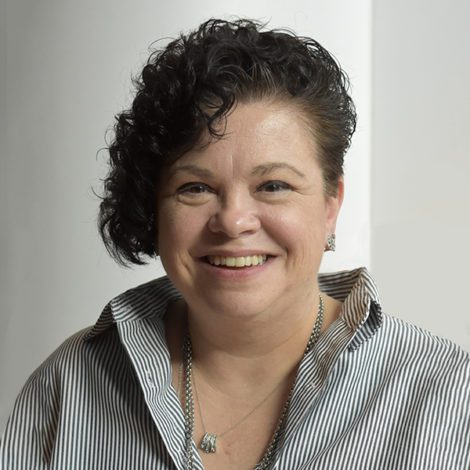

“There's always something more, something new to tackle. But even looking back – and I have this great graphic now that I show, ‘Here's how the journey of the intranet has come since 1998’ – and it looks very transformative, so it's great to look back on. And even when we have made one-degree shifts, we've made little changes, it's all added up to something big.”
Senior Director, Digital Workplace Colleague Experience
Contact us to apply to join DWG as a member and become part of a community of more than 900 digital workplace and intranet leaders and practitioners.
Apply for membershipBook a free one-to-one consultation to review the current state of your digital workplace and discover how DWG expert guidance can help you move forward with confidence.