The coherent capability arc: DWG’s 2026 research focus revealed
Episode 162 – The coherent capability arc: DWG’s 2026 research focus revealed
Organizations are trying to roll out, scale up AI, but often at the moment they’re trying to do it on top of weak foundations, which could be fragmented content, unclear governance, maybe their literacy is not there, the data hygiene. I feel that’s something we’re really responding to strongly in the programme this year – by thinking about those strategic capabilities that are going to make organizations ready, whether it’s the skills, the knowledge quality, the AI governance patterns – dealing with agent sprawl, for example – as well as human oversight. So, I think that in a way this is to really think about those foundations. We’re in an exciting time, there’s a lot of ambition. Where’s the readiness?
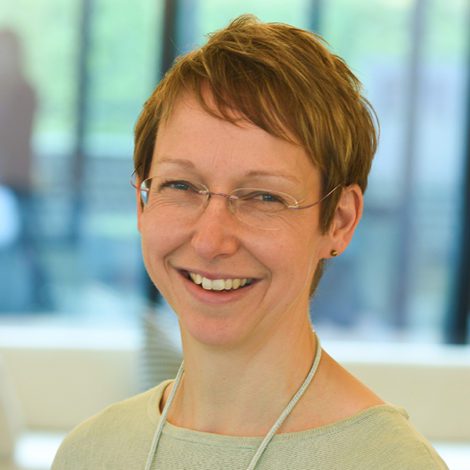
Elizabeth Marsh, Director of Research, DWG
Nancy Goebel
Welcome to Digital Workplace Impact. Today, we’re diving into DWG’s 2026 research focus and the big idea shaping it all: the Coherent Capability Arc. We’re joined by Elizabeth Marsh, DWG’s Director of Research, for an inside look at how she, in collaboration with DWG stakeholders, spotted the signals and decoded the patterns in order to shape our future-focused research programme for the year ahead. If you want to understand where the digital workplace is heading and how to stay ahead of the curve, then this episode is your roadmap.
This is Nancy Goebel, DWG’s Chief Executive and host for this conversation. Digital Workplace Impact is brought to you by Digital Workplace Group. Join me now in conversation with Elizabeth. Happy listening!
Elizabeth, I’m so excited to have a chance to come back into conversation with you in the podcast studio. Over the last number of months, we’ve chatted about the awards and insights from the programme. We’ve teed up thoughts about the research programme. And, of course, you recently revealed the 2026 agenda for DWG members and our wider industry circle. And I love the fact that we have some time carved out to chat today about the research programme that will be unfolding this year. So let me start by extending a warm welcome for your return to the studio.
Elizabeth Marsh
Nancy, it’s always a pleasure to be here and I’m always excited, in particular at this moment when we’re just announcing the new programme and starting to commission papers. I think I’m especially excited this year. I feel like this is a research programme that is going to make a really big difference for our members and beyond. So, I’m looking forward to digging into some of those topics with you.
Nancy
Fantastic. And so, as DWG’s Director of Research, tell us about how you’ve approached the design and the development of the annual research programme for 2026.
Elizabeth
So, the important things to me are that the process is participatory and that it’s evidence-based, of course – it’s a research programme. And that starts with listening – and that’s happening throughout the year. We have hundreds of touchpoints with our members and wider community through the conversations that we have direct – things like AskDWG, live tours, benchmarking debriefs – and that gives us an ever-evolving and real-time picture of what practitioners are struggling with. And that’s the first guiding point for the research programme.
And then of course we run our formal annual survey with members and that helps us to understand the level of demand for different areas across different industries, roles, maturity levels. From there we start to shape a programme for which we then have this wonderful Research Advisory Board (RAB) of real trailblazing digital workplace practitioners and leaders who come together. And that board plays a really critical role in shaping the programme.
And it’s a chance for us to, I guess, stress test early hypotheses that we have, highlight any blind spots, making sure that we’re being sufficiently ambitious while also bringing different members with us. And, of course, alongside that, we use generative AI intelligently. And for me, that’s been a partner to test ideas, synthesize some of the inputs, spotting some of the connections across those different signals – because there are a lot of signals – and I like to use it as a little bit of a devil’s advocate to actually challenge back with the ideas as well. So that’s been an exciting part of that process. The end-result is a programme that’s built very much in that participatory way. It’s member-informed, validated by that board. And I guess it takes our members from, ‘Wow, where should we focus this year?’ to ‘OK, here’s the practical path forward’.
Nancy
And you mentioned that there’s this element of spotting signals and patterns. Share with us a little bit about some of the standout elements of that which flowed through into this process this year.
Elizabeth
I think for me, the high point of that is with the Research Advisory Board where they’re thinking very deeply about these topics – and they’re managing digital workplaces in their organizations. Being able to dive into them, with them, the different kind of signals that we’re hearing, ‘How does this sit with you?’, ‘What are you seeing?’ – that really helps and is very powerful in seeing the patterns across topics; in particular this year, I guess, in seeing how AI was flowing through topics, but also that there were specific areas of core practice that we needed to focus on as well.
Nancy
And in sharing the launch announcement, first to members and then to our wider industry circles, one of the things you talk about is this idea of a ‘coherent capability arc.’ I’m curious to hear you explain that in plain language, whether it would be to digital workplace leaders or to a C-suite, because that’s an important part of the wrapper that’s coming together relative to these signals and patterns that you described.
Elizabeth
Yes, I really feel a sense of that arc going through the reports.
So, we do around six reports each year and running through this year is, as you say, this ‘capability arc’, starting from the flagship reports which set the vision – and there we’re looking at the idea of the ‘liquid digital workplace’ (so, how experiences flow around humans and that next stage of maturity in those experiences).
Then we get into ‘OK, so how do those same humans work with the AI that is inherent in those experiences and is being augmented?’ and that handoff between human and agents and really exploring that interface.
And then, beneath that, getting into ‘So what are the skills and the confidence that we all need as humans to really make the most of those experiences and those interactions?’ So there’s a flow through there in the first three papers.
And then we get into, let’s make this really real. So ,‘What are the knowledge foundations, the content foundations that we need for all of those things to happen?’, ‘How can we sharpen the metrics that leaders are using to steer the digital workplace?’. Again, within that wider context.
And then really getting into the practical AI use cases that are delivering value right now. So yes, we know we need to scale, we know we need to have ambition. But what can we do? No regret now in terms of leveraging the tools that are there. And that’s going to be a paper that’s really going to help people to focus, right now. So together, those six papers are going to give organizations the why, the what and the how. So it’s a complete joined-up path from the ambition through to the execution.
Nancy
I love the way you’ve framed the programme this year. I’m curious as to whether you can pinpoint what’s different about this year’s programme as compared to previous years, if anything.
Elizabeth
Well, I mean, obviously as we go through the years, the recent years, AI has become more woven into the programme. And that’s something we really talked about with the Research Advisory Board – you know, how that would be woven through papers that we’re looking at and looking at AI success patterns. So not just looking at Copilot or particular tools, but understanding that much bigger picture and then all of the elements that are really going to make it work. So, getting beyond the hype to, you know, ‘How do we make this intensely practical in the world?’. So when we come to digital IQ, going from models and frameworks, which are important, to how do we now draw that understanding of the skills that we need into knowing the learning journeys that people need to go on; understanding the picture of where their competences are at present, where their confidence is at; and then really mapping that into the different roles, the different tasks that are happening. That’s one example of really getting into that practical element.
Nancy
Just thinking about the Research Advisory Board, you’ve said that they were really an integral part of framing the programme with you. And I’m curious as to whether you can take us back to the gathering of the Research Advisory Board and share with us any specific decisions or ‘aha moments’ that may have come up during the RAB meeting that really shows that level of influence that they have in the process?
Elizabeth
And what a great way to start the new year that conversation with the Advisory Board was. So high calibre! I think one of the things that stands out to me is the way that we were testing this idea of the ‘liquid digital workplace’ and getting to that level of these experiences flowing around people. That really took life with the group. Understanding that maturity shift from, OK, we’ve gone from where we had the static experiences, we’ve focused a lot on integration, and now we’re getting into this phase of adaptive orchestration. So, looking at the signals, the flow, how do we manage attention in those different experiences and that kind of intelligent surfacing of what people need. And so that really, for me in that conversation – that topic really crystallized as the anchor of our programme this year, which was exciting to see.
I think also in that conversation, we talked quite a bit about the connections between the topics, which I talked about with the capability arc. And we talked about something that we think about, I think, every year, but perhaps it came into more focus this year, which is needing to go deep. So we want deep insights in these reports that kind of show the calibre of the research and the deep thinking of the research team – but also how do we make that ‘snackable’? We love to include tools and models that people can use. One example was talking about the idea of the stats book, you know, in the metrics piece – so this is something that people can kind of go into and reference and look up and really help them to think about their measurement and business case. So, there’s more but those were a couple of the key things for me.
Nancy
I can tell that you’re someone whose roots are analyst based! This idea of giving focus and attention around measurement in a whole new light is just music to my ears because I still find the most often asked question I get in conversation with people who are just coming into DWG’s orbit is a desire to understand the benchmarks for things like intranet usage or email open rates, etc. – very basic measurements that people are still struggling with. And I often feel like those are still the vanity metrics that people are all too focused on and we should be much more value-driven and impact-driven in our conversations. I feel like this year’s programme with the measurement scope included will really be an opportunity to level up and to help practitioners in our circle really start to speak the language of the business executives, boards – tying things back to some of the priorities that I outlined as part of the predictions for 2026. So, you know, the fact that this programme is going to take that on in a bold new way is really important for our industry and for sustainable value extraction from programmes that are changing the way people are working day to day inside of large enterprises.
Elizabeth
Yes, I’m excited about that as well. It really builds on, you know, we have that heritage around metrics and measurements and have published a lot of reports in that library of over 100 reports now, particularly in the last few years focusing on what are the new metrics that are available that have real impact, how do we show that impact, and then, really excitingly last year, looking at the storytelling. So I think this year that connection to leadership and decision-making is a really important development.
Nancy
Absolutely. And so you’ve shared words of wisdom, advice when we’ve talked about the awards programme in the studio. And I have to bring that question back into the discussion with the research lens. Whether it’s in terms of the programme scope or things that you observed with the dynamics within the Research Advisory Board, if you had to offer any advice to digital workplace leaders and their teams looking at 2026, what might that be?
Elizabeth
Yes, so again, I draw quite strongly here on the Advisory Board and that group was really clear. Organizations are trying to roll out, scale up AI, but often at the moment they’re trying to do it on top of weak foundations, which could be fragmented content, unclear governance, maybe their literacy is not there, the data hygiene. I feel that’s something we’re really responding to strongly in the programme this year – by thinking about those strategic capabilities that are going to make organizations ready, whether it’s the skills, the knowledge quality, the AI governance patterns – dealing with agent sprawl, for example – as well as human oversight. So, I think that in a way this is to really think about those foundations. We’re in an exciting time, there’s a lot of ambition. Where’s the readiness? You know, something we look at across benchmarking and consulting with members, is understanding that readiness – and that sort of pause, brief pause, is just like a major power-up for all of those initiatives.
Also, I’m thinking about, we’ve got that topic of ‘real-world AI’. What are the small number of patterns that deliver a disproportionate amount of impact really fast? I think we want to get into that route as well as looking at the foundations, the bigger picture. What do we do now? So we get both that deliberative aspect, reflecting on where we’re going and what’s needed, but also immediate action that we can take for kind of no-regret use cases.
And I guess that connects right back around to the topic we were just talking around. You talk in your predictions about really being able to lead with clarity and the importance of surfacing that clarity – of course for employees using the digital workplace but also for the teams and the leaders that are at the helm as well.
Nancy
For those who want to see the research programme in full and learn a little bit more about the six marquee or flagship topic areas. Can you suggest where to go?
Elizabeth
So, please go to the Digital Workplace Group website, where you can download the full fact sheet. It will also give you an overview of a lot of what’s in the library so you can understand the background. And there’s a bit more detail on each of the topics in that. And of course, while you’re there, there are reports and there are excerpts that you can download for free as well, so dig in and hopefully get some value from that as well.
Nancy
For sure, it’s a window into the mega trends in our industry and then providing the tools and the resources and the insights about what good looks like and how to translate concept into practice vis-à-vis these headline topic areas. And so, of course, all of the key details around the research programme are also available on the member extranet and we will signpost both the member access point and the website in the show notes so that they’re there for handy reference as a complement to this conversation.
But for now, Elizabeth, thank you so much for stepping out of your day-to-day to come and share some of the headlines, the insights, the patterns, the signals, the insight into conversations where people would love to play fly on the wall and learn from. And the research programme this year is certainly a powerful lineup. We just can’t wait to take in all of those great insights in the weeks and months to come.
Digital Workplace Impact is brought to you by the Digital Workplace Group. DWG is a strategic partner covering all aspects of the evolving digital workplace industry not only through membership but also benchmarking and boutique consulting services. For more information, visit digitalworkplacegroup.com.