Enquire about consultancy
Book a free one-to-one consultation to review the current state of your digital workplace and discover how DWG expert guidance can help you move forward with confidence.
Host Nancy Goebel is joined in the studio by Ted Hopton, DWG alum and Manager of the Workplace Technologies Team at Motorola Solutions.
Are you a technology enthusiast, a business leader or someone who is simply curious about the future of work? If so, sit back and enjoy this episode of Digital Workplace Impact, which is packed with insights and inspiration around responding to rapid technological changes and human factors whilst transforming the digital employee experience (DEX).
Host Nancy Goebel is joined in the studio by Ted Hopton, DWG alum and Manager of the Workplace Technologies Team at Motorola Solutions.
The world of work is changing at pace – and it’s happening in impactful ways inside Motorola. Ted brings to life the experiences and approaches that he’s taking in his work to balance the needs of the business with those of employees when making decisions about what's next.
For all this and much more about digital transformation at Motorola Solutions, join Nancy and Ted for this great discussion.
Digital Workplace Impact Episode 155: Leading digital transformation at Motorola: A community manager’s perspective
[00:00:03.420] – Ted Hopton
When we think about technology, we think about organizations, we go up into the clouds and we’re thinking, Oh, this. And it’s easy to get conceptual and, shall we say, overly strategic. And it’s really important, I think, for us as leaders to ground ourselves in real conversations with the real people who are actually using the technology and to remind ourselves that probably the worst The worst way to design an effective intranet page is to get a bunch of smart people in a room to do it by themselves, because that’s not going to take into account the user perspective. You need to remind yourself to be humble.
[00:00:46.480] – Nancy Goebel
Welcome to Digital Workplace Impact. Today, we’re diving into the world of digital transformation with Ted Hopton, DWG alum and manager of workplace technologies team at Motorola Solutions. Whether you’re a tech enthusiast, a business leader, or just curious about the future of work, this episode is packed with a valuable mix of insights and inspiration from Ted on balancing rapid technological changes and human factors while transforming the digital employee experience. Digital Workplace Impact is brought to you by Digital Workplace Group, and this is Nancy Goebel, your host and chief executive at DWG. Join me now in conversation with Ted. Happy listening.
[00:01:36.640] – Nancy Goebel
Ted, I am so excited to welcome you into the studio today. We bumped into each other at the Bright conference in Chicago a couple of months ago, the conference that’s produced by the team at LumApps. And I was really energized by reconnecting with someone I see as a DWG alumni who is thriving. And it struck me that it would be really lovely to dip into your world for a little bit and understand what you’ve been up to and learn from some of your wisdom and maybe even do a little future-gazing as part of a catch-up.
[00:02:36.360] – Nancy Goebel
And so thank you for taking time out of your day to come and have a chat with me.
[00:02:42.840] – Ted Hopton
My pleasure. It was a delight to catch up with you after a number of years and just serendipitously end up at the same place. So I really enjoyed our conversation, and I look forward to continuing it here.
[00:02:55.960] – Nancy Goebel
Hopefully, this is the first of many conversations to follow, but I think it would be a great place to start by saying that one of the things I do try to do is stay connected with DWG alums through LinkedIn. Not surprisingly, most of us do a lot of networking there. And had noted that in the course of your tenure at Motorola Solutions, that you have taken on added responsibilities over time. And nowadays, you are a manager of workplace technologies and would love to dip into what that’s like. And I guess it’s been about a year since you moved into that role after having been a strategist. And so would love to understand how your role has changed as well as some of your key learnings so far.
[00:03:58.500] – Ted Hopton
I’ve been at Motorola Solutions it’s just over three years now. And so I was hired as the Enterprise Community Manager for their internal digital workplace, which runs on the LumApps platform. It’s branded as BatChat internally. You think of the Motorola Solutions logo, it looks like a bat. So BatChat is what that stems from. It’s a fun name. But that was my focus. One of the things that drew me to the company was that the BatChat platform and the Google Workspace team responsibilities were both managed by the same person. It was the same. They were grouped together. And I liked the idea throughout my career working with social intranets, digital workplaces, et et cetera, I’ve often felt there were missed opportunities in other places I worked to integrate or really coordinate the efforts of those separate but related technologies. And employees don’t really care. They’re I’m not worried about this team is here and this team is there. But within orgs, it’s usually separate. And I was attracted to the idea that these were at least co-located. They weren’t terribly integrated, but at least there was the potential there. They already recognize as being similar enough to be managed by the same person.
[00:05:18.220] – Ted Hopton
And so that drew me to it. And then after being there a couple of years, really focused on our LumApps platform, the opportunity came up when my manager got promoted, then he looked to me to take his role and cover both of those technologies. And so that’s the role that I stepped into. And I’m really enjoying it. It’s been really refreshing for me to be perfectly transparent. I’ve been basically focused on digital workplaces since 2008, and a little bit stale, maybe in some ways, because it’s just if you focus on one thing solely, it’s hard to keep being excited about it. Having a new areas to learn and to to have responsibility for and to see the potential for help, hopefully connecting better the stuff that I already am so familiar with on the digital workplace side, connecting it to how do employees use Google Workspace, which is where they’re in a lot during the day in our company. And so all of that I found really exciting and I continue to find very rewarding.
[00:06:23.360] – Nancy Goebel
And of course, our space is one that’s undergoing so many changes at the moment that there is no notion of becoming complacent now. The change is continuous, and it’s coming at us seemingly faster and faster. Just thinking about your role as it stands today, what would you say are some of the biggest priorities that you have?
[00:06:49.280] – Ted Hopton
I think I just would start, first of all, with the human factors, Nancy, and not even thinking about the technology. I became convinced long ago in my career that I was better suited as an individual contributor than as a manager. I’ve had a rocky first experience as a manager, some ups and downs and enough to make me go like, I’ll just do my thing. But at this point in my career, I’m just really enjoying being a manager. It’s suiting me. I get excited helping people grow, helping them tap into their potential and really building a team culture to support our focus on employees. So I think that’s maybe something, a lesson that I had to learn that I may change during my career. I may change during my life and what I like and what I prefer. And I’m glad that I was open enough to that to accept this opportunity and not say, oh, no, no, that’s not my thing. I reflected on it and decided like, All right, I’ll try this. And I’m really happy I did. So just from a people standpoint, it’s really rewarding. This will be no surprise to anybody.
[00:07:52.140] – Ted Hopton
Our biggest priority is really around generative AI. It’s just taking up all the oxygen in the room in so many ways. And we’re running as fast as we can to figure out what to do with this, how to do effective things. We’re already seeing tons of amazing things our employees are doing. But it’s just the tip of the iceberg, just to cite the cliché, is there’s so much more we can see the potential for. And that’s both in Google Workspace, where we launched Gemini for Workspace in February. And in our LumApps flat platform, we’re looking at generative AI, and how does it complement what’s already there? How is what LumApps is building going to fit with our future plans? Do we do some our own integration with Gemini or other technology? All sorts of things are on the table, and it’s like a giant buffet, and we don’t know what to eat next. We’re trying to figure out what our next path is. So I would say that’s definitely the top priority. It’s just trying to figure out what’s the future look like. And that means as short as three months, six months, not to mention, I don’t know how we could forecast five years from now.
[00:09:05.030] – Ted Hopton
I’m not sure that’s possible.
[00:09:06.960] – Nancy Goebel
Well, all we know at the moment is that change is coming fast and that I think those of us in leadership positions, especially, will need to straddle the idea of managing a mix of both people and AI agents of various kinds.
[00:09:30.000] – Ted Hopton
Absolutely.
[00:09:31.000] – Nancy Goebel
And so there will be roles that haven’t even been conceived of yet that will exist five years from now. But I’ve just written a post on the Diary of a CEO that talks about the fact that change agility is the new social currency of the enterprise. And I’m thinking about what you’ve just described, taking that human-centered approach, managing people and extending that over the next few years to include agents, AI-based agents, and then also looking at how to help unlock people’s superpowers, in a sense, as AI becomes more pervasive in the enterprise. And so not only as a manager do you need to support and enable your team’s transformation, but the enterprise at large. And I think that’s part of what makes operating in our space so fascinating right now. It is a real test of our ability to apply agile thinking in a whole new way.
[00:10:50.100] – Ted Hopton
There ought to be a new word that beyond agile, something that ramps it up, turns it up to 11. You’re absolutely right, agile, but I’m almost thinking, we need a new word because we’re just being challenged so much.
[00:11:00.700] – Nancy Goebel
Well, you’ve just thrown down the gauntlet, and so I’m going to spend some time thinking about what that might look like. Because.
[00:11:09.880] – Ted Hopton
Awesome – I want to hear. I wanted to share. You made me think of a story just real quick. I wanted to share that literally a leader in our company was talking yesterday. We were doing a training for our whole supply chain organization at the Motorola Solutions, which is absolutely an essential part of our company’s success, being able to really manage the supply chain effectively, especially in uncertain times. And it feels like the last five or six years have all been uncertain times. So it’s a super critical part of our organization. And we were getting to the end of this training about Gemini for Workspace And I love the way he closed it out. He said, I know some of you are nervous or unsure about this technology, unsure about what it means for you. You feel like you’ve already got so much to do. You don’t have time to learn something new. And he said, I want you to think of it as if we’ve just given you a number of new people to join your team to help you work more effectively. What would you do? Well, you’d onboard them, you’d train them, you’d figure out how to work with them and integrate them into the team to make the team more effective.
[00:12:17.980] – Ted Hopton
He said, That’s how I want you to think of generative AI, as this is an opportunity to add to your team. So I thought that dovetailed nicely with the way you just said, you’re managing agents or managing AI in addition to people.
[00:12:32.020] – Nancy Goebel
Many years ago, I had a manager who said, The best strategy for helping move people through change is to think as similar as is necessary, as different as is possible. And this story that you’ve just shared, this anecdote draws upon the familiar, but stretches people’s thinking all at the time. And so there’s a lot of power in that anecdote.
[00:13:08.540] – Ted Hopton
Indeed, it really resonated with me. And it’s an example of just a The privilege that I feel in my role to get to interact with so many people across the company as they’re all facing this transcendental change. Everybody is grappling with, what does this mean for me? What does it mean for my job? What does it mean for my team if I’m a leader? And what does it mean for the company? Not to mention, what does it mean for the world? We won’t even try to go there. And I’m just really inspired by some of the people I’m encountering and the ways they’re responding to this challenge. And rising to it and applying their own background that they bring to it. Everybody brings their own expertise and perspective. And I just feel very lucky to be able to interact with so many people. And I just see, wow, she’s doing amazing things over here. And this person is doing something completely different, but also mind-blowing over there. And much as many of us in digital workplaces are used to being the connectors in the company because we interact with so many people, I just love connecting these people.
[00:14:17.460] – Ted Hopton
You need to talk to this person. They’re doing that, you’re doing this, you’re on the same path, but totally different perspective. Go talk. You learn from each other. And that’s really exciting. It’s always been an exciting part of I’m finding a digital workplace leader. And I’m finding the same thing as we’re dealing with generative AI and Gemini in particular, where my team is at the center of all these people coming in wanting help. And so we are learning all about how the org is using it, and therefore we’re able to help begin to make those connections and group people and say, You need to know this and this. And sometimes it’s within the same org, and they don’t know it. It’s like throughout sales, we have so much interest in Gemini. But international doesn’t necessarily know what North America is doing. And so we’re like, Go talk to them. You guys are all on the same team. Share your ideas. You’ve all got great ideas. They’re just different and you should be sharing. So it’s just really exciting. I’m getting a little carried away.
[00:15:15.040] – Nancy Goebel
One of the things I always say is that in the work that we do, whether it’s you from a Motorola Solutions standpoint, me from a Digital Workplace Group point of view, we’re part knowledge brokers, part connectors, part coach. And so I’m curious, knowing that you are straddling both the digital workplace arena and the employee experience that’s wrapped around that, how do you and your team balance the needs of the business with the needs of the employees at large in the enterprise when you’re making decisions about what’s needed next?
[00:16:07.220] – Ted Hopton
That’s a tough question, Nancy. I want to give a simplistic answer, but I don’t mean to be dismissive at all in saying… What I want to say, and I don’t think it’s totally true, but I’ll say what I want first, and then we’ll explore why I have doubts about it. I want to say that those two really should be aligned. That what is good for the worker and the employee should be what’s good for the organization. And that’s not at all to dismiss the tension that you’re rightly bringing up. But I guess that’s the place I like to start with, is that ideally, we should be working to get to a point where what is good for the employee also is good for the organization overall. In reality, you’re absolutely right. There are conflicts, and sometimes we do have those, what do we choose here? What is the right way? And I think it’s often you’ve got to evaluate each situation. There isn’t a real metric that or rubric that we can apply necessarily. But if I have to err on one side or the other, I tend to err on the side of the employee experience because ultimately, they’re creating the value for the company.
[00:17:18.700] – Ted Hopton
The underlying principle guiding me is if you take good care of the employees, you will have an effective organization. Sometimes, the leaders of the organization at the highest level just aren’t as connected with the employees, so they may come up with strategies or policies or actions that aren’t fully aligned. And I think it’s usually because they’re just a little disconnected. They’re trying to do what’s best for the org from their perspective, but it’s just hard to be connected with everybody, especially in a large organization. We’ve got 25,000 people working at Motorola Solutions, so there are going to be times when there is some misalignment, and then we have to try to find ways to reconcile that. I’ve avoided answering your question, but that’s the approach I take to it.
[00:18:10.220] – Nancy Goebel
It resonates. I think about my roots in Six Sigma, where you think about the voice of the business, the voice of the employees, and the voice of the process. So in this case, that’s coming at it from a technology standpoint in a way. And you need to look at all three in weighing strategic decisions and importantly, be guided by data driven decisions in order to be able to help spot opportunities, but then also to be able to quantify the impact that you’ve achieved on the other side of making some of these strategic decisions. And so understanding all three of those viewpoints can be really important because there are times where we see emerging technology, and it is there to prompt us to think differently, but we still need to be grounded in purpose and value and impact. And in bringing some of those new capabilities into the enterprise. And we’re seeing that so clearly with AI. It wasn’t just plug it in and let it go. It’s really understanding what the purpose is and then helping people unlock their superpowers in a way that frees them from some of the friction and some of the repetitive tasks, and then builds from there in terms of finding answers, connecting the dots, and all of these other things that you shared as some key insights about how the world of work is changing rapidly, and you’re seeing it in very impactful ways inside of Motorola.
[00:20:23.260] – Ted Hopton
There’s so many things you’re making me think of. I really like that insight and the way you tied it back, and now I’m just afraid I’m going I’ll just forget all the things that you’ve made me want to bring up, but I’ll try. I think the first overarching point is I want to try to tie together some things that I think I’ve left unsaid. It just been implicit, but I want to be more explicit about it. My background as an enterprise community manager is the foundation of how I approach my job overall. Even though my role has changed, that’s still the foundation. And those The lessons learned as being a community manager are so effective and so powerful. And so we’re seeing really tremendous results in terms of adoption of Gemini, the classic hockey stick graph where it’s going and now it’s going up, up, up. And that’s this scaling effect that enterprise community managers know from how it can build when you’re working on adoption of a new platform or the new technology. Back in the days when we were first trying to get people to use these new tools, these social intranet tools, what do they do?
[00:21:36.520] – Ted Hopton
What are they for? And gradually, as people catch on, then it’s like, oh, and more people see it, and then they say, oh, look what that’s doing. And it just builds, right? And you get the exponential growth. That same approach, the community approach, online community, engaging people, scaling by getting other people to help with the adoption. So it’s not just driven by a small central team doing everything. You empower people in the organization and tools like digital workplaces allow people to do that. They can take on their own leadership roles. They have a voice. They have a place that they can share what they’ve learned. And that’s how it really builds and spreads viral throughout an organization. We’re seeing the same thing with generative AI, the adoption. We heavily leverage our digital workplace, Batchat, LumApps, to support the adoption of Gemini. We have a community in there where we share updates and keep people informed about new features which are rolling out all the time. People can engage with us. We post. That’s where we share when we’re going to be doing training. People can register and get to it. We have a knowledge base that we build in LumApps with, I’ve lost track, it’s probably about 150 different items in there now, learning resources, what other people in the company, Hey, here’s a prompt I’ve used.
[00:22:57.520] – Ted Hopton
This works really well in this situation, or we’re more detailed things. We’re really trying to build that culture of getting everybody to share in the knowledge base. So everything and anything that anybody knows about Gemini, ideally, will be in this knowledge base. We’re far from that. It’s early days. But I just want to tie together how the technologies in my mind, don’t need to be separate. We don’t need to think of them separately. They support each other. And then really, the next point I wanted to make, and I’m really interested in your thoughts around this, Nancy, are Thinking, setting aside the technology. Really thinking of, say, online community management, which we associate with tools like digital workplaces, or in the customer world, an online community in the internet. But if we think more broadly about the concept, then it doesn’t really matter what the technology is. And that leads me to the next thing. I was recalling a conversation back in 2018 with a technology leader I have great respect for, and he was arguing passionately that intranets were going to be dead within three years. And it was a great fascinating, obviously memorable, I still remember the conversation, and there was a group of us, and we were bouncing back and forth and debating this.
[00:24:19.800] – Ted Hopton
Obviously, that hasn’t come true. But if you set aside the timeline, I think his point was and remains valid in that the technology is going to change. And I would just say, and you I know, are aware, and I’m sure you’re keeping your members aware, it’s always risky to get too in love with a particular technology because technology keeps evolving. And so it’s really good to think about, I love the term digital workplace as opposed to intranet, because intranet’s technology. And the intranet technology may not be around forever. But digital workplaces, I think, if we think of the concept of how do employees work, get their work done in digital with digital technology, that’s going to be with us for a long time, but it’s going to keep evolving. And generative AI is pushing that to happen faster. And so this person’s point was basically, why will you go to the intranet when you can just ask a question of a bot and it’s going to give you the answer? And while that is, I think, going to be our future, that content the bot uses still has to live somewhere. Where is it going to live?
[00:25:26.110] – Ted Hopton
And I would argue, at least for the foreseeable future that I can see which isn’t terribly far, I guess, but it might as well live in a place that’s accessible for humans and browsable by humans, which is what an intranet is, ultimately. So the intranet may evolve. I’m not sure it needs to die, but I think it does need to evolve, and it may become more hybrid. It’s not only for humans, but it’s also optimized for these bots and agents that need to pull in this information. So that’s a brain dump of some of the things that your last comment made me think of. What does that make you think of?
[00:26:00.180] – Nancy Goebel
So I guess one of the things I’m thinking of that we will want to signpost as part of the show notes is a piece of research that Steve Bynghall has just written around intranet futures. And we’ve long had this conversation about intranets are dead, long live intranets. And one of the metaphors that I adopted a long time ago was to refer to the digital workplace as the digital headquarters of the enterprise, because in a lot of ways, it’s almost a living, breathing personification of the organization. And in some cases, it is the place where people connect. It is the virtual water-cooler. It is the space where people can come together to collaborate or to find other people who have expertise that’s needed and a whole host of other things. And you can think about that digital headquarters as having different rooms and hallways that connect those rooms. And hopefully, it doesn’t look like the Winchester mystery house in California that has stairways that go nowhere and doors that open to brick walls. That’s why roles like yours are so important, so that the friction levels are managed, the integration of spaces that allow for form and function to come together so that in a way, you’re an architect of a different sort that helps that headquarters function appropriately, but also that it’s sustainable over time because the need for spaces can change.
[00:27:52.280] – Nancy Goebel
If you think about how homes are designed nowadays, it used to be for energy, For reasons, among other things, there were a lot of homes with small rooms because they could be heated more easily. And as heating systems became more ubiquitous, modern living set in and suddenly the open floor plan was born. And so the outside of the house may be roughly the same, but walls have moved or been eliminated and structures have been reinforced. And so understanding lifestyle in a corporate setting and how that’s changing along with the business strategy will lead to re-architecting spaces, leveraging technology. And so what we know is, of course, that change will come. And it’s a matter of figuring out how to balance those voices that we talked about earlier, the voice of the business, the voice of the employees, and the voice of the process, to allow for that flexibility going forward so that the spaces that we create in the digital headquarters are intelligent and beautiful and functional over time. And those are things that we know will be part of the future landscape. But many of those elements, whether it’s the experience that gets designed or the people who are navigating through those rooms, will have greater and greater support from AI.
[00:29:38.600] – Nancy Goebel
And so as leaders, not only within the digital workplace, but on behalf of the digital workplace, supporting that organizational readiness and transformation as connectors is going to be even more important going forward.
[00:29:57.800] – Ted Hopton
I like that you use the word re-architect. I think that aligns with what I’m envisioning is going to happen with our LumApps platform, that we’re going to probably have to take our human-centered architecture or information architecture in LumApps, which works quite effectively now. But we’re starting to look at how can we take this new agent that’s being built that’s supposed to pull in all sorts of knowledge across the company. And at first blush, you look at it and you go like, I can’t really use much from our LumApps platform because our platform is not designed to be a knowledge base. It’s designed to be a communication platform. And therefore, there’s always outdated stuff because people share today, here’s something I want you to know. And they are not in the habit of and haven’t ever needed to be, going back and saying, Hey, I better delete that post I made six months ago because now it’s outdated. It’s just humans understand that it says, Today we’re doing this, and then there’s another post six months later says, Now we’re doing this. A human will easily recognize, Oh, I shouldn’t pay attention to that old one.
[00:31:07.880] – Ted Hopton
I should pay attention to the new one. But if the bot is going through and just scraping all that up, it’s harder for that context to be absorbed. So we’re going to have to, I suspect, re-architect how we share information in our LumApps digital workplace. And there’s still going to be the need for, as you talked about, the connecting and the communicating and the sharing. That’s still going to happen. We just may need to architect a separate part of it that is the official stuff. This has been vetted, this has been verified. The content owner’s promise that it’s kept up to date. Okay, bot, go read that stuff, learn that. And then when somebody wants to ask a question, it can give accurate information. So that’s a very simplistic today view. Probably a year from now, I’ll look back on that and say, That was so silly. They’ve already We figured out a way around this. But at this point in time, that’s the way I’m thinking. But I think all the things we’re talking about here, probably in a year or two, we’ll look back and go like, Oh, what we didn’t know.
[00:32:10.760] – Nancy Goebel
As the expression goes, you have to crawl before you can walk and run. And so I certainly foresee a flywheel effect kicking in around the pace of change here, but also the value creation as part of that process. Again, exciting times to be in the digital workplace and employee experience arenas at this time. And I guess as someone who has seen and created success inside of your organization, I think it’s important to just pause for a moment and see if there’s any parting advice that you might give to others who may be struggling to ensure that their digital workplaces are meeting employee needs and not just looking good on the surface.
[00:33:14.020] – Ted Hopton
I think that’s a really insightful way to think about how we bring this conversation to a close. And going back to my technology experience focus that I started with Motorola Solutions, and I’ve been working on building that capability throughout my career, just naturally evolved from different roles I had. Some of it is just as simple as just talking to people. And really making sure that you’re doing that. And I think when we think about technology, we think about organizations, we go off into the clouds and we’re thinking, Oh, this. And it’s easy to get conceptual and, shall we say, overly strategic. And it’s really important, I think, for us as leaders to ground ourselves in real conversations with the real people who are actually using the technology. And to remind ourselves that probably the worst way to design an effective Intranet page is to get a bunch of smart people in a room to do it by themselves, because that’s not going to take into account the user perspective. You really need to You need to remind yourself to be humble and realize that your brilliant idea actually might not work at all for the average employee out there who is really your customer.
[00:34:41.300] – Ted Hopton
And so go talk to them, do surveys, do focus groups, whatever you want to do, and watch them use your tool. That’s the other humbling thing. I’ve designed great pages, in my humble opinion, and then watched users use them and stumble around. They couldn’t figure them out. They go, well, okay, I guess it wasn’t so great after all. And you learn from that. And then you can really… I just think a little humility goes a long way in leaders in every role. And it’s a good reminder for us all that no matter how much experience you have or success you’ve had, you really just want to talk to people and listen to what they’re telling you and watch what they’re doing, and you can learn a ton, and that’ll help you come up with your next great idea.
[00:35:24.760] – Nancy Goebel
A little dose of humility and a lot of focus around active listening.
[00:35:36.900] – Ted Hopton
Absolutely. And observation, not just listening, because I could go off on a tangent here, I won’t. But It’s like Henry Ford said, he’s supposed to have said, I don’t know if it’s actually true, but the old adage, he said, If I’d ask people what they wanted, they would have said a faster horse and not an automobile, because they couldn’t picture what an automobile is. So when you’re talking with people and trying to learn their needs, you have to be careful not to just ask them what they think because they don’t necessarily have the context to give you a future-looking answer or an out-of-the-box answer. It’s also tempting when you ask people, Hey, do you like this page? Do you like the way this is designed? It’s an invitation for them to put on their impressive hat and think of all the things they’ve ever heard about what you’re supposed to do and say, Oh, it takes too many clicks. You shouldn’t do it that way. Like, Well, that’s not really what you think. That’s what you think I’m supposed to want to hear. So watching people is really the most powerful thing for me. Give them a prototype and say, Okay, try to do this task.
[00:36:43.840] – Ted Hopton
And if they can do it well, then you can go, okay, we’re on the right track. And if they’re stumbling around, you go, okay, now I want to talk to them, say, well, why didn’t you click on that button that says what it says there? Oh, I didn’t see that. Why didn’t you see it? Well, there’s 20 buttons on this page. I didn’t see that one. All those kinds of things that we become blind to because we’re so expert in the technology. It’s really hard for us to really intuit what the non-expert experience is going to be. So we have to be humble. We have to watch them as well as talk to them.
[00:37:18.600] – Nancy Goebel
Well said. So we’re quickly coming to the end of our time together, and I have just a final question for you, and that is what excites you most about the future of work and the role that the digital workplace will play in helping to shape that.
[00:37:46.780] – Ted Hopton
I think we are living in a time when the world is truly changing, and that is extremely exciting as well as terrifying. I fear for the impact on individual people, because when there is drastic change as this generative AI and AI technology is bringing to us, we know from history, there are always winners and losers. And there are people who are going to be hurt by this. And that worries me. And I want us to look for ways to minimize that and to mitigate that. But I think for the vast majority of people, it’s going to be incredibly empowering and open up possibilities that just didn’t exist before. And for people who don’t have certain kinds of skills that blocked them from kinds of roles in the past, they’re going to be able to do them with the help of generative AI, and it’s going to open up and just unlock so many possibilities for their careers, their lives, for organizations and the way they function. I think it’s just absolutely a pivotal moments in history that we’re living through right now. And those don’t come along very often. And it’s really exciting to be part of it.
[00:39:07.280] – Ted Hopton
At the same time, it’s really scary because it could go bad. It could go really bad, but I hope it won’t. And I think we need leaders to really be aware of the potential dangers and watch for them, not just blindly assume everything’s going to be rosy, but try to be realistic. Yes, there’s so much potential and great stuff, but there’s a lot of danger here and risk, and we need to start watching for it and be aware of it and help our organizations to not fall into bad stuff that might be lurking around the corner that we can’t even imagine yet.
[00:39:43.240] – Nancy Goebel
It’s eyes wide open while we essentially continuously learn and grow.
[00:39:53.620] – Ted Hopton
Yeah. I think people with a growth mindset who are willing to toss aside maybe things that they’ve held on beliefs or concepts they’ve held their entire lives and really accept change and think differently, I think they’re going to thrive. And so I encourage people to just be humble, be willing to accept that maybe all the stuff you thought was true isn’t true. And it doesn’t mean it’s wrong. It doesn’t mean it isn’t true, but it might be. And be open to those possibilities, and you’ll start to embrace the the new possibilities that we’re all just beginning to discover. And every one of us has the opportunity right now to become the next pioneer. This is a huge opportunity space for individuals career-wise to look at like, Hey, what can I do with this? What do I bring to this? My particular background, my history, my interests, what can I do with this technology that I couldn’t do before? And how can I maybe try something new nobody’s ever done before? And that’s just so exciting. So I think there’s a lot of potential for people to get huge benefits from the changes that are coming now.
[00:41:08.710] – Ted Hopton
But you really do, I think, need to embrace the change opportunity, and you need to just dive in and start using it.
[00:41:17.300] – Nancy Goebel
Well said from the mouth of a digital workplace pioneer.
[00:41:24.740] – Ted Hopton
Thank you, Nancy. It’s been so much fun talking to you.
[00:41:27.700] – Nancy Goebel
It has been a lot of fun, and thank you so much for stepping out of your day-to-day for a bit to have this chat. And I hope you’ll come back into the studio at a later point to share how things have been progressing. But for now.
[00:41:45.520] – Ted Hopton
That would be my pleasure.
[00:41:46.800] – Nancy Goebel
But for now, thank you so much for your time, your insight, and your energy.
[00:41:54.080] – Ted Hopton
It’s been an honor to be part of this podcast. I know it has a long, rich history, and you’re doing a fantastic job in carrying it on and making it into your own… I don’t know what the right word is. Instrument doesn’t seem like the right word, but I guess your own way of sharing and engaging with knowledge and with leaders and making that accessible to a large number of people, which is a great thing to be doing.
[00:42:23.910] – Nancy Goebel
Well, thank you. And it’s time for a worthy pause now. And you’ve given me so much to think about in addition to some lovely feedback. So I appreciate that very much. And thank you for coming into the studio today.
[00:42:42.000] – Ted Hopton
My pleasure.
[00:42:46.260] – Nancy Goebel
Digital Workplace Impact is brought to you by the Digital Workplace Group. DWG is a strategic partner covering all aspects of the evolving digital workplace industry, not only through membership, but also benchmarking and boutique consulting services. For more information, visit digitalworkplacegroup.com.
[00:43:07.110] – Ted Hopton
There ought to be a new word that beyond agile, something that ramps it up, turns it up to 11. You’re absolutely right, agile, but I’m almost thinking we need a new word, because we’re just being challenged so much.

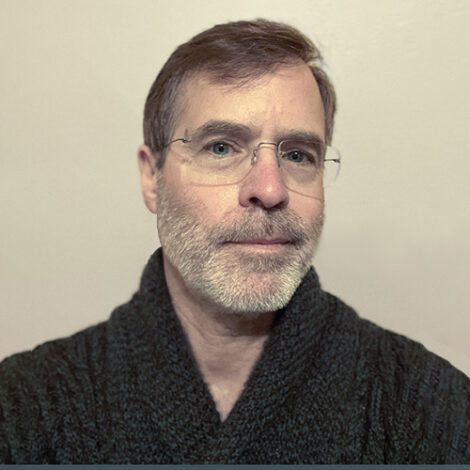
“It's easy to get conceptual and, shall we say, overly strategic. And it's really important, I think, for us as leaders to ground ourselves in real conversations with the real people who are actually using the technology – and to remind ourselves that probably the worst way to design an effective intranet page is to get a bunch of smart people in a room to do it by themselves, because that's not going to take into account the user perspective. You need to remind yourself to be humble.”
Motorola Solutions
Contact us to apply to join DWG as a member and become part of a community of more than 900 digital workplace and intranet leaders and practitioners.
Apply for membershipBook a free one-to-one consultation to review the current state of your digital workplace and discover how DWG expert guidance can help you move forward with confidence.