Enquire about consultancy
Book a free one-to-one consultation to review the current state of your digital workplace and discover how DWG expert guidance can help you move forward with confidence.
In this episode of Digital Workplace Impact, DWG CEO Nancy Goebel speaks with Aletta van Asperen, Senior Communications Innovation Strategist at ING Group, about the organization's research into what it has termed 'infobesity' – the overwhelming volume of messages, notifications and content competing for employees' attention every day.
Intranet futures in an AI era: Why the fundamentals still matter
Organizational readiness: What digital workplace teams need to know
Information overload is a challenge facing organizations of every size, yet few have taken the time to understand its true impact on employees. In this episode of Digital Workplace Impact, DWG CEO Nancy Goebel speaks with Aletta van Asperen, Senior Communications Innovation Strategist at ING Group, about the organization's research into what it has termed 'infobesity' – the overwhelming volume of messages, notifications and content competing for employees' attention every day.
Drawing on focus groups and employee communication diaries, ING uncovered valuable insights into how information flows through a large, complex organization. The research highlighted two major themes: duplication of communications and the ongoing challenge of relevance, with employees reporting that only around half of the communications they receive feel directly relevant to their work.
Aletta explains how ING is using these findings to drive a long-term transformation programme focused on reducing noise, improving communication quality and creating a more streamlined digital workplace experience. The discussion explores the importance of collaboration between communications, HR and technology teams, the growing role of content governance in the age of AI, and why communicators must act as advocates for employee experience.
Digital workplace leaders and practitioners will gain practical insights into measuring communication effectiveness, reducing information overload and building sustainable change that helps employees focus on what matters most.
Episode 171: How ING is tackling infobesity in the digital workplace
“I think the key challenge that we see, also for ourselves, is taking our employees along this journey, explaining to them what it is that we are doing, so making sure that the story is out there so that they understand. But it’s more a transformation and progression story than it is a story where we bring big-bang change, right?”
Aletta van Asperen
Senior Communications Innovation Strategist, ING Group
Nancy Goebel
Hello and welcome to Digital Workplace Impact.
In this episode, we explore a challenge facing organizations everywhere. It’s called ‘infobesity’. To help us unpack this ongoing digital workplace challenge, I’m joined by DWG member alum Aletta Van Asperen, who’s a Senior Communications Innovation Strategist at ING Bank.
Aletta and team recently undertook a research study to examine the realities of infobesity inside this banking giant and translating what that means for leaders, communications and employees alike. In conversation, we explore what ING’s research reveals and the path that ING is taking to go beyond Ozempic-style interventions and drive long-term sustainable change.
This is Nancy Goebel, DWG’s Chief Executive and your host. Digital Workplace Impact is brought to you by Digital Workplace Group. Join me now in conversation with Aletta. Happy listening!
Aletta, I am just so delighted to be reconnected with you as someone who is part of the DWG alumni network. You’re someone I’ve always followed in your external activities when you’ve shared thoughts, challenges with our wider circles. And not long ago, I happened to catch the CEO from Swoop Analytics make mention of the fact that you were together for an internal communications meetup and that you had shared some interesting internal research that you had been leading inside of ING and it just sparked an idea for me – and that was to get in touch and to suggest that we have a chat about it. And so, I have to start by extending a very warm welcome to you and to thank you for stepping out of your day to have a chat.
Aletta van Asperen
Yeah, well I’m happy to be here and also happy to talk a bit more in detail about what we have been doing.
Nancy
I was really intrigued to learn about his initiative, but also how you came about the term ‘infobesity’ in framing your session a couple of months ago. So, start by telling us a little bit about this research initiative and what precipitated the study and then we can start to explore its twists and turns together, including this concept of infobesity.
Aletta
Well, it’s a nice term, right? I did not invent it, but I think collectively, internally, when we talked about the topic, somehow this idea popped up and I think it kind of gives you a visual to something that we might all recognize if you work in a large company, or in any company – that there’s just so much information around, right?
You get information from all angles. It’s, let’s say, coming from your own team, your own department, your coworkers, your management. And then there are layers and layers in an organization that will feed you with information or at least reach out to you as an employee to share whatever is important. So, it’s coming from all angles and all directions.
And we felt that we had some assumptions about the nature of work and also the impact that it has on employees, but we did not have any hard data. So, for us in a global communications department, we felt that it would be good if we could get a more detailed view, if you can say it that way, of what is actually coming to employees. Also to have a better understanding of what it means – basically what the context is that we communicate in. Because if there is so much information going out to employees, our assumption was that they don’t necessarily have enough time to consume everything, right? Because there’s only so much you can take in as information during your workday, and there’s also your work that you need to do, which usually takes priority. So, we felt that it was really important to get a better sense of that coming from the employees themselves.
Nancy
That’s a great frameup in terms of the scope and focus of the research. I’m curious to know a little bit about what the research looked like on the other side, and just looking back, what were some of the things that you were most careful to measure about the employee sentiment and scope of activity, for starters.
Aletta
So let me give a bit of a background because last year we did qualitative research, but it was already an approach that we started with a few years ago.
So, basically where we came from was that we had hard data on how people experience our internal communications; what they feel about strategy communication. So really, from a communications point of view, we had the data in place to understand, let’s say, how messages and communication land, but not so much what I just described about the context and the context in which communications take place and also how employees consume information.
So that’s why we wanted to run qualitative research. We decided to engage with an external agency for this, because we felt that we needed to have the right expertise and also to have, let’s say, an objective party around the table to be able to help us with that, and to have a trusted party who could do this qualitative research with employees. So, we decided to work together with a research agency that helped us to set up focus groups and we ran a series of focus groups with employees. In total I think we had almost 50 employees around the table, different conversations.
We also had a good mix between people who were really in the business versus managerial roles; we had a good spread of functions and roles across the organization. And basically, the focus groups gave us a lot of input and insights in how employees are experiencing communications at large in the organization.
Next to that we asked a number of employees from that group to track their communications – so really give us an insight into what actually lands in their inbox, what notifications, and how many do they get during a day? Really kind of getting the tangible insights of the daily reality for an employee. So, we asked them to keep a diary for a week to get a sense of the sheer amount of what a working day, working week, for an employee looks like and how much information they are getting. That really helped us to get a very detailed view of what it needs.
Nancy
And can you share with us two or three patterns that emerged in all of this?
Aletta
It’s interesting to see a number of trends/patterns appearing here. So, one of the things that we clearly saw coming back in the conversations was that employees mentioned they see a lot of duplication of messages. I think maybe not surprisingly in large organizations, and specifically if you have a matrix organization, you can be a member of different audiences, if you look at it that way. But you’re a part of, let’s say, different groups that all tend to receive similar messages. So, it might feel to you as an employee, ‘I’ve seen that message before’, right? Because you work in retail, but you’re also you’re an IT guy working for the retail organization. So you would get a message from the retail organization, but also from your IT organization, and then different layers and levels of messages coming to you. So, duplication would be a big trend. And I think that’s one.
The second pattern that we saw emerging was relevance. So, employees really look at messages and quickly decide whether it’s relevant for them, yes or no. And what we saw was that employees indicated that around half of the communication was relevant to them. Well, you can look at it from two ways, right? Either you see, okay, it’s positive, at least 50% of what employees receive they feel is relevant, but yeah, what about the other 50%? So, I think this was for us also a clear signal that we really need to look into how do we increase the relevance score of what is being sent out to employees, what they receive. So, I think those were the two, let’s say, most striking insights and patterns that we saw emerging in this piece of research.
Nancy
Yes, and this is very powerful because as you’ve aptly pointed out, these are the kinds of things that you can measure over time to understand how you are moving the needle by taking action on these findings.
And so, we talked about the concept of infobesity and framing this overall research and, to your mind, are you making a distinction between that and information overload? Is that something that needs to be nuanced, or was it part of your change paradigm to catch attention from, you know, leadership and other stakeholders internally?
Aletta
Yes, I think we decided to use the term infobesity internally. I think there is maybe a bit of political incorrectness if you could say that in using this term. But I think it’s also very powerful using this image because everyone immediately understands what you mean, right?
Nancy
Uh-huh.
Aletta
And I think in terms of flagging that this is a real serious, let’s say, maybe not an issue but at least a topic that we would like to address and also create awareness around, I think we decided to keep on using it – using it in conversations with internal stakeholders, with management, to also create an understanding of basically putting the topic on the agenda that this is something that really needs to be addressed.
If we want to be effective internally, if we want to do something about reducing workload for employees, it is something that needs attention. We cannot just move on and accept that the world around us changes, but then don’t do something about this, right? So that’s why we decided to use the term infobesity.
I think if you ask me if there’s a big difference with information overload, no, it’s basically the same. But I think framing it as infobesity has a really powerful connotation to it and that’s why we want to keep on using it at least internally to make people aware of what it is, how it is affecting employees, and what we should do about it. Because yes, there are definitely some buttons you can turn to make a change – but it starts with awareness creation.
Nancy
And I’m actually probing here systematically in order to help build a story arc – and the story arc is that we are at a point in the evolution of the digital headquarters where AI is certainly taking hold in a lot of organizations, taking hold at scale. And it’s changing the table stakes for what it means to be a digital workplace leader or practitioner.
And the art of storytelling is how you create that attention-grabbing moment to inspire change, but then you have to back it up with the right data, quantitative and qualitative. And this is the time of year when we have organizations, we have leaders like you, who are entering the Digital Workplace of the Year Awards. And we see those entries peppered with artful and impactful storytelling. So this is an opportunity to have a parallel conversation to that track about the formula for success and impact. I wanted to recognize that in the midst of this conversation and it’s why I pushed a little bit harder on the angle for infobesity.
So, obviously the impact story is what matters here because anytime you’re putting employees at the centre of a conversation, and you’re asking them for information, for input, for time, they need to see value in return for that. Tell us a little bit about how you took this problem described as infobesity, and what Ozempic-style interventions have been taken so far and maybe what’s next?
Aletta
Yes. So, to start with the Ozempic interventions, I’m not sure if we’ve been able to already achieve quick results, Ozempic-style, right? You don’t lose that many kilos in just a matter of weeks or months, but I think the start is there and I think that was really a win for us.
What helped us was that we shared our findings with colleagues from other departments who we typically collaborate with in the digital workplace – so that would be our tech colleagues, our HR partners, because we all, let’s say, have similar areas of interest; sometimes our activities are overlapping. So, we’ve already recognized for a number of years that we need to closely collaborate here.
One of the things was that we did the piece of research but we shared the outcomes with our colleagues to also raise awareness with them to address this problem and basically make it – I can’t exactly say a shared problem – but to make sure that our internal stakeholders were with us. Also to be able to take the next steps because some of the interventions are things that you can do just by discussing and changing your way of working, but some of them are all also grounded or rooted into your some of your technological solutions that you have.
So let me give some examples of what we discussed. One of the things that collectively with other departments we’ve been looking into is, for example, the number of notifications that employees are receiving; getting a sense of where do they come from, from which systems? How much noise do they make? Can we somehow turn it off? Are there easier ways to combine notifications together? And there, typically it’s not just one solution, but it’s multiple solutions and you try to bring them together. But basically that was one thing we did, so really looking very consciously at notifications coming out of systems. So that would be, for example, your Office environment – but also some other systems that employees need to interact with to approve something, or whatever. So, bringing all those notifications into one place as much as possible, integrating that or at least taking the first steps to integrate in a digital workplace. That is the direction that we’re heading. And I think that relates to the point that some things you start with are not always that easily implemented in just a matter of weeks, but if you have the intention to go in that direction, I think that’s a really powerful step you can take.
So, that is one thing – and we’re very much in the middle of our execution. I think ongoing is the part where we do awareness creation. Since we are a very large organization, there are many, many, many departments who communicate in some sort of a way. It’s not only us from a global perspective trying to reach all employees and all staff in the organization, but we also have many markets, many countries. They have their own communication departments, they have their own HR departments, they sometimes have their own tech departments. They all communicate. So, basically, storytelling is something of a longer journey. You really need to be prepared to repeat that story and keep on or continue with awareness creation. So that’s an ongoing activity.
One of the other things that we are looking into, again with direct relation to our landscape, our technical landscape, is what can we do to bring information together in one place. What we find in our research is that what is most disrupting for employees in their workday, in their workflow, are things that make noise. So, pull channels in the sense of a channel where an employee can actively go on their own behalf to find information, or do something that they intentionally want to do, is experienced as much less intrusive.
So, with that insight, it also helped us to think about ‘Okay, could we take steps to bring more things together in one place?’ A digital workspace, if you could call it that, or a digital homepage where employees can do many things, or multiple things at least, that help them to ease their workday or do things quickly, find information quickly – so a more efficient approach to some of our internal digital tools that we have scattered around. And that’s again, let’s say, a trend. It’s not something that you can change overnight; it’s step by step by step, and you need many parties in that process. So, again it’s something where you work together with departments like our tech department, HR, communications. You all need to join in and basically head in the same direction.
Nancy
So it’s no small task that you had to create essentially a hearts and minds movement across this stakeholder group to have sustainable and meaningful impact over time.
Aletta
Yes.
Nancy
Now that this challenge is on the board, you have some strong baseline information that you were able to gather as part of the initial research. And knowing this is a long game, what sorts of measurement are you using to get a pulse check as you’re taking these baby steps day by day as a collective group of stakeholders?
Aletta
So, what we did before were separate pieces of research – and basically, even last year, the focus groups that we ran were a separate piece of research. The approach we want to take from now on going forwards is much more making sure that we do these pulse checks. We already had that lined up, targeted more towards events happening in the HR and tech space, so a workplace space. So asking employees how they experienced, say, if you were a new joiner, handing out your laptop, onboarding, things like that. So really measuring the experience of employees on a day-to-day base triggered by certain events.
How we want to take this forward from a communications point of view is to piggyback, if you can call it that, on that ongoing pulse survey and add some specific communications questions to it, which are much more related to communications in the sense that we want to measure the things I talked about in the beginning, like relevance, overload. So, how do people experience this?
Then our idea is, if we do this, we can also track changes over time. As it’s set up as a regular pulse survey, it allows us to measure interventions if we change something. For example, we have a new feature, maybe, let’s say, bringing together even more notifications into one place – I don’t know if that’s the right example – it would allow us to measure if that really has an impact quite quickly as well.
That’s the way we want to take this forward. So, not adding another survey on top of what is already out there, because I think that would not be true to our intent in the sense that we don’t want to add more information to our infobesity that’s already out there, but to try to be quite pragmatic in the way we do this, in a way that allows us to see if we are going in the right direction and also to track progress over time.
Nancy
And, you know, you’ve talked about different things that require attention in this overload paradigm, relative to noise and relevance and context switching, etc. – and just to pull the infobesity thread forward, the idea is that you almost need a calorie index, right? And to reduce that steadily over time.
So, whether you call it noise calories or attention calories, if you want to take the glass half-full metaphor, then you can start to see that measurable impact over time. And often measurement is something that is used to help tell the story of how things are progressing, what new obstacles are emerging. And the first audience that gets to see that is the stakeholder group that’s trying to affect the change. And then the leaders in succession of that to provide ongoing sponsorship.
But we started this conversation with the employees at the centre, and so I’m curious as to how you’re keeping employees apprised about how this work is progressing, having tapped them on the front end?
Aletta
The key challenge that we see, also for ourselves, is taking our employees along this journey, explaining to them what it is that we are doing. So, making sure that the story is out there so that they understand. But it’s more a transformation and progression story than it is a story where we bring big-bang change, right? I think that is important. So that is what we do need to do: make sure that we also take along our employees in this whole infobesity storyline and show them, ‘Hey, we heard you. We understand that this is daily reality. We also want to address this, and this is the way that we are trying to do this.’
And also, again, regularly check in with employees, not only by this pulse research, but by just making sure that you talk to colleagues in the markets, in your organization, to understand whether that story lands and if you need to change anything about it. But really showcasing what it is that you’re doing. And hopefully in a couple of years, you will be able to see where you came from and where you are at that moment.
Nancy
Understood. You know, this is not a fad project. This is changing some of the fundamentals so that there’s sustainable impact over time. And so I’m with you on that score.
I also appreciate that there are a lot of organizations that are putting emphasis around thinking about content and knowledge in new ways. We’ve seen with the advent of artificial intelligence coming into the workplace that there has been a resurgence in knowledge management and content governance – and so, as you think about this body of work and how the employee experience is going to be evolving both proactively through this transformation effort, but also through the lens that streamlined content and knowledge in the organization will also benefit things like AI, what would you say is the best advice that you can offer to other digital workplace leaders and practitioners in the now based on this programme of work so far?
Aletta
Well, I think there are a couple of aspects that you could look at, right? One is the way you put out content in the organization, the formats that you use, and, let’s say, the scannability of your content, if you can call it that, of the messages that you try to get across. I think if you have the insight that people only have a few minutes per day to actually take in your messages, you really clearly need to think about how you bring those messages to them. Do you do that in a very efficient and effective way? And do you do your best to bring information together instead of sending out 10 different emails with 10 different messages? You could send out one email – a very condensed, short version – trying to do it once to have a very effective overview. So this is just an example, but I think this is for communicators something they could think about: short scannable formats. And maybe also think about the relation between – and I think for each organization this is different – what you do on your internet versus what you do on your social platform versus what you still maybe do in email where you know that with the rise of AI there are multiple ways to tackle this and that, knowing employees, there are many different work styles so you really need to think clearly about how you are catering for that. So, it’s not just one advice but I think this is an area where you need to think about what works for your organization – and I think ‘short’ is the key word here because not a lot of people have a lot of time.
I think in terms of content governance, it’s clear that it’s really, really important that the quality of your content is key – so really looking at how you’re going to address outdated content, maybe on your platforms, but also raising awareness with anyone who publishes content on whatever knowledge platforms you have in your organization, that they really understand why you’re focusing so much on the quality of it. Especially with the rise of agents, people can find a lot of information that is around, so I think making sure that you have that part, let’s say, mapped out, and that it’s clear that you know what you need to do to take the right steps to increase the right quality – or to increase the quality to get the right output. So, I think these are two key areas I would I would look at.
Nancy
And one of the things that often comes up in conversations within DWG’s circles vis-a-vis content and communication specifically is to ensure that messaging has a clear call to action. And it’s not just information for sharing’s sake, but that people know at the end of reading an article, for example, or watching a video, that there is something clear for them to think, feel or do in reaction. And so, in combination, these things all start to have a material effect on reducing the overload paradigm inside of organizations.
And so, Aletta, this conversation has just sailed by and there are so many useful insights and you’re always very generous in your sharing. So, I’ll just pause to say, is there anything we’ve missed?
Aletta
No, but to your last point, I think the capability of communicators in saying no is a very important one. So, really also think about your role as gatekeeper in whatever communication is going out to employees. I think I didn’t mention it, but I think it’s an important one and it should be part of your approach that you very critically think about ‘Is this really necessary?’ Are people really interested in this piece of information or is it just for the sake of whatever nice story profiling, or whatever reason there is behind putting the story out there. But, thinking about relevance from an employee point of view is really key.
Nancy
And so, another way of thinking about this is that communicators need to be advocates for the employee experience while helping to progress the business agenda.
Aletta
Yes, I think that’s very nicely put.
Nancy
Well, I love to give a call to action of our own with these episodes of the podcast, and that’s clearly our ‘it factor’ for this session. And so Aletta, as always, it’s a pleasure and thank you again for stepping out of your day to be in conversation with us.
Aletta
Thank you. It was nice to be here.
Nancy
Digital Workplace Impact is brought to you by the Digital Workplace Group. DWG is a strategic partner covering all aspects of the evolving digital workplace industry, not only through membership but also benchmarking and boutique consulting services. For more information, visit digitalworkplacegroup.com.

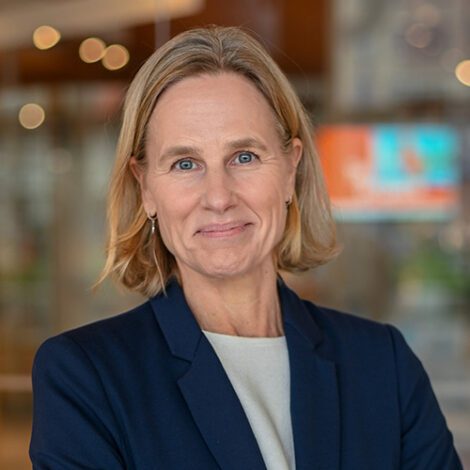
"The key challenge that we see is taking our employees along this journey, explaining to them what it is that we are doing. So, making sure that the story is out there so that they understand. But it's more a transformation and progression story than it is a story where we bring big-bang change, right?"
Senior Communications Innovation Strategist, ING Group
Contact us to apply to join DWG as a member and become part of a community of more than 900 digital workplace and intranet leaders and practitioners.
Apply for membershipBook a free one-to-one consultation to review the current state of your digital workplace and discover how DWG expert guidance can help you move forward with confidence.