Enquire about consultancy
Book a free one-to-one consultation to review the current state of your digital workplace and discover how DWG expert guidance can help you move forward with confidence.
Nancy Goebel is joined by DWG Awards judges, Kerry O’Donnell, former Executive Director at The Estée Lauder Companies, and Rory Gardner, Director and Team Leader for Associate Knowledge and Strategic Insights – Digital Workplace at Fidelity Investments.
Invest 10 minutes to assess your digital workplace maturity.
Dive into 'Digital brilliance: Lessons from DWG’s 2025 Award winners'. For this episode, Nancy Goebel is joined by studio guests Kerry O’Donnell, former Executive Director at The Estée Lauder Companies, and Rory Gardner, Director and Team Leader for Associate Knowledge and Strategic Insights – Digital Workplace at Fidelity Investments.
Together, they explore the exceptional nature of the 2025 DWG Awards entries and what these tell about the evolution of the digital workplace.
You can find out what inspired our guests to join the Awards judging panel and hear their insightful reflections on the Awards submissions. In a climate of hybrid work models, budget constraints and lean staffing, big inspiring advancements are definitely still being achieved.
Teams continue to push the boundaries. They’re redefining the future of employee experience and operational excellence in the digital workplace. AI is high on the agenda and the trio digs into what it takes to scale AI responsibly and effectively.
It’s a great discussion with observant commentary, a touch of future gazing, and even some helpful advice. If you’re interested in digital workplace brilliance, then listen today!
AI was a key topic in many submissions this year, and it’s just great to see the community at large embrace it and explore it both responsibly and effectively.
Digital Workplace is a great platform to educate employees on that. It’s where employees go as a trusted source. It’s important to publish your clear and accessible AI guardrails there. Then in simple, easy-to-understand plain English, which AI can help you with, to address employees’ day-to-day use here. And one of the themes is that sometimes people who are in the beginning stages of AI doesn’t think it works because they don’t see the full potential of what it can do. And the digital workplace is a place to showcase the company-level thoughts on this, department-level individual successes, as well as understand what it takes to do this responsibly and ethically.
Welcome to Digital Workplace Impact brought to you by Digital Workplace Group. This is Nancy Goebel, your host and DWG’s Chief Executive. Today, we’re diving into digital brilliance, which includes lessons from DWG’s 2025 Awards program. In the studio, I’m joined by two exceptional studio guests for some strategic insights and candid reflections. These include Kerry O’Donnell, who is not only a DWG luminary, but also a former executive director at the Estée Lauder Companies, and Rory Gardner, director and team leader for Associate Knowledge and Strategic Insights at Fidelity Investments. Together, Kerry, Rory and I explore what inspired them to join our awards panel, up through and including exchanging reflections across the winning entries. These included transformational stories, strategic impacts, data-driven and human-centered approaches to such transformations. We even had an opportunity to delve into innovation and operational excellence, along with what it takes to scale AI responsibly and effectively. Finally, we reserve some time for some future gazing and some advice to grow on. Join me now in conversation with Kerry and Rory. Happy listening.
Kerry and Rory, I am just thrilled to have you join me in conversation in the studio. I know we’ve had lots of opportunities to connect over the last few months with all of the work that’s been happening behind the scenes in and around DWG’s 2025 Awards program.
But I’m especially happy now that the unveiling has happened with members and our wider industry circles, now we get to talk a bit more about some of the specifics and not only the who’s who, but the what’s what and the why is why. And so I just want to officially welcome you and share that it’s just always great to be in conversation with both of you. You have such phenomenal insights to share.
Awesome. Well, thank you so much for inviting me. Kerry, it’s great to see you. Nancy, always a pleasure to see you. Just thrilled to be here and to be part of the studio. I’ve been looking forward to this for a number of years, actually. So excited to be here with you today.
I’m generally excited, too. And it was such a great experience being a judge. I’m happy to share more of it with your audience.
Fantastic. And so we three, along with Elizabeth Marsh, who is the DWG Director of Research, came together this year to be the judging panel for the awards program. And I think it’s always helpful to give a little bit of an origins story when you embark on a conversation like this. And so I’d love to hear from you what motivated you to join the judging panel this year. And Rory, maybe we can start with you.
Yeah, that sounds excellent. So 2025 actually marked the second year where I was serving as a judge here for DWG. So again, very excited. But what motivated me specifically to participate again is always the opportunity to learn, to engage, and just to see what’s going on with leading digital workplace organizations across the globe. Now, each year that I’ve participated, I’ve been inspired by the submissions that we’ve received. I love seeing how teams are continuing to push the boundaries to redefine what the future of employee experience and operational excellence is and will be related to the digital workplace. And always a chance to hang out with Kerry, Nancy yourself or Elizabeth. I’ll jump at that opportunity any day.
Same here. And Kerry, what inspired you to become one of our judges?
I really wanted to have a first-hand front row seat at seeing all the advancements that are happening in the digital workspace. It was really great seeing how all the talented teams are turning collective ideas into real-world solutions despite all the significant challenges they had. There’s hybrid work models, everyone’s under budget constraints, lean staffing. People are still able to make big advancements.
Well, it feels as though you are both leveraging the insights from the process, almost as you would benchmarking, an opportunity to get a vantage view to start and then to start to compare the different capabilities, challenges, impacts that have been achieved. I’m wondering if you have any thoughts about what stood out most about this year’s class of entries. And the reason why I think that’s an important question is that, of course, historically, DWG had very specific awards categories. And in refreshing our awards program this year, we decided to open things up to allow for a wider set of stories to come into our orbit for evaluation. So, Kerry, what stood out for you?
Really what stood overall was that we’re setting new standards for what’s possible for the winners here. One, I think, was one of the new awards that was offered, the Lean Digital Excellence Award. Lean seems maybe a strange term to have as an award, right? And I think everybody first thinks about, Oh, I’m running with a small but mighty lean team. But that term lean originates from the manufacturing industry, and it focuses on maximizing customer value while minimizing waste. In a digital workplace, this means we have to deliver relevant personalized information, eliminating efficiencies while continuously improving our tools and process to really enhance that experience. And Adobe won the award. It had a small team, but they really had really deep dynamic personalization tailored to all the employees’ roles and locations and needs. It had AI integration with Gen A-powered search for really faster, more accurate results. And it had a lot of impact. It had quantifiable ROI, super click-through rates for the desired actions they want employees to take, and governance for rigorous standards and content audits and SEO. It was really the next level of what’s possible. Secondly was Campbell’s. They really had a data-led experience. A lot of times we come from the knowledge management or content or news or culture experience.
But there’s this data led and they focus on decks. So this was really something I think people see Campbell’s more a traditional brand, right? But they were really showing cutting edge use of analytics to continuously fine tune the employee’s experience. And it was really unexpected to me and also inspiring.
Rory, what would you add to that? What stood out for you?
So first, I completely agree with Kerry. If I zoom out a little bit, what stood out was, again, having a great number of submissions from a shortlist perspective, getting down to about 14 right around there, and then being able to review all of those without any predefined awards allowed the judges to keep an open mind and evaluate that way. But as I looked at it, this year, those 14 were much stronger in strategic alignment and the human-centric approach. So all entries were really upping their game. I think during the awards show, we talked about the boey effect. And so I definitely felt that in a lot of the submissions in terms of the tide rising all the boats. But from a submission perspective, we saw them go beyond the technical, just innovation or just a strategic roadmap progression. But it also included a lot of interesting insight into governance processes, designs, the impact of work. So I think Kerry’s two examples really clearly defined that. It wasn’t just, here’s the new thing that we turned on for everybody. It was a holistic story that people could really understand and then relate to.
Yeah, and I would add that, of course, we saw a range a range of AI initiatives that have gone from pilot to scale and impact. And that really stood out across a mix of capabilities from homegrown to, quote, unquote, industrial strength solutions like Microsoft and others. And so really seeing this coming of age within the AI arena stood out. And also the level of strategic impact. Gone are the days where people are just thinking about whether it’s the intranet specifically, or the digital workplace as hygiene. Digital workplaces are strategic assets inside of organizations and supporting and enabling the wider enterprise business strategy. And that set of connections was very apparent across the winners, whether you’re talking about a DBS bank, a MITRE Corporation, and even the organizations that you’ve both mentioned by name. So it really was like watching a bouyancy effect where the water level went up and all the boats moved along with that compared to the prior generations of the awards program. And that’s really exciting. And it’s not just because of a COVID effect. This is because organizations are valuing the role of the digital workplace, increasingly importantly, and that people who are stewards and owners of the digital workplace are also providing greater care to lead with a data-driven approach, but to tell the stories that matter and making the case for change and then following through with the impact on the other side.
AI is now the cornerstone of the digital workplace, right? With all the entries there. But it’s also one of the best places to help a corporation enable their workforce with AI. It is usually one of the big trusted sources for employees. You can go there and get the most important news. The content is accurate and reliable. It’s comprehensive. It’s a great place for companies to advance their overall company AI capabilities and changing and evolving their businesses at large.
This is what I’ve been thinking about as digital brilliance as we’ve been working through conversations about the parade of winners, whether it’s through the articles that we’ve just published, both to members and our wider circle or the awards ceremony itself. Rory, were there any additional either qualities or common threads that you pulled through from the winning entries that truly exemplified this idea of digital brilliance?
What jumps out to me first as I go to almost being in that submission chair. And so if anyone’s going to start with the threads or the qualities, that’s where my mind went originally. Maybe first to introduce a framework in terms of the submission. The submissions that clearly captured the context, basically what was the situation, who are the characters, the challenge, that problem that the team is working on to resolve, the choices that are laid out in front of them, the identification of those in terms of the options and what they actually did, but then driving it through to the result, that framework and that emphasis on storytelling that I know DWG has been champion being within the group as well, is really coming to a point where it’s helping with bringing those qualities forward in all of these submissions. It’s easier for us as judges to identify what is that digital brilliance from a subject matter perspective if everyone can tell that story the right way. And so from a subject matter perspective, now that we have that framework, we already talked about AI, the two favorite letters right now in technology. Obviously, the adoption piece and the readiness effect.
Knowledge management is still near and dear to my heart and clearly was a big part of enabling a lot of that AI. And then one thing that I really love seeing is the digital dexterity and aptitude piece, and I saw that in different ways of promoting this new way of working. One of our entries, Vodafone, even had their wow campaign, which is focused on the ways of working, specifically. Another one was Work Smart from Kellanova. It really was building around the actual associate themselves. But again, that digital brilliance really shines through from a topic or a subject once we have that framework that we can all, again, internalize and then discuss here as judges.
That’s so well said, Rory. I think you’ve really captured a big shift here. We’re moving from just an intranet to an intelligent work companion. We’re moving away from static, but helpful news and knowledge portals towards just one step forward towards AI-enabled teammates that will surface knowledge for you, anticipate your needs, personalize the site so that it’s what most relevant for you is there so you can get in, get what you need and get out. AI search is definitely a core feature now. It’s also we’re seeing with the vendors, the digital workplace platforms, that they’re building it into the content publishing process. It’s so much easier with AI helping you, especially if you’re not one of the professional writers. You’re outside the communications teams or the HR teams to help you write the content because the best intranets really have a lot of local articles and local information. It’s not just top down. So it’s just really an exciting time for this.
It really is. And when I stop and think about the role that AI is playing, yes, it supports productivity. Yes, it supports findability of content, but also it’s helping to unlock people’s superpowers. So there are people who have a rich story to tell, but to your point, they may need the support of a writing companion to really help bring that brilliance forward. But also there are people who have ideas for solving very specific business problems who aren’t developers. And yet now AI can act as a development buddy to help automate tasks or workflows or help get specific things done through increasingly powerful agents. And so it’s a really exciting time for our industry, and it is unlocking a new level of brilliance. And importantly, organizations like the ones that you’ve described, Rory, whether that’s Kellanova, Vodafone, or others, are really putting people at the center of this transformative moment to help them adopt new ways of working. And that’s empowering, but also plays an important role in allowing for greater innovation to come through as well as impact. I’ll be very curious to see where we are just a couple of years down the line.
But for now, Kerry, tell us a little bit about what you learned from this year’s entries and what it takes to scale AI responsibly and also effectively in the digital workplace. We know that the customer-facing side in a lot of organizations has moved faster, farther because there’s revenue on the line. Things have moved at a different pace from a digital workplace point of view, but exciting nonetheless.
There’s so much I could talk about. I just wanted to limit it down here. I think one important point is to echo what Rory said earlier that ROI is a must here. You can’t make big advances without proving the value. And that was definitely a theme we saw. And another scene that really helps you get to the AI and get to really get the value to everyone is having what I’m calling a liquid experiences versus fixed sites. Campbells and Vodafone are pointing us to a future where the content and tools are unbundled from the intranet or digital workplace itself, and they flow across Teams, Slack, your mobile phone, the meeting rooms, your home office, right? Just meeting the employees actually where they are. And it’s such a good foundation for what’s on the horizon, these AI teammates, right? And the intranet, to your point, Nancy, has to help with the company promote as well as live the values of responsible AI. So digital workplace is a great platform to educate employees on that. It’s where employees go as a trusted source. So it’s important to publish your clear and accessible AI guardrails there. Then simple, easy-to-understand plain English, which AI can help you with to address employees’ day-to-day use here.
One of the themes is that sometimes people who are in the beginning stages of AI doesn’t think it works because they don’t see the full potential of what it can do. And the digital workplace is a place to showcase the company level thoughts on this, department level, individual successes, as well as understand what it takes to do this responsibly and ethically.
Well, I think Kerry hit the nail on the head with that. That’s one of the benefits of the awards and the community here. So depending where you are on your maturity journey, there’s learnings for view. One thing that I found myself as a judge looking at these different AI entries was just trying to figure out where different organizations were. There’s no bad spot right now, but it’s just with it being the new technology, there are different organizations that have resources or strategies that are ahead of the curve. So with that being said, the ones that are ahead of the curve and that we awarded awards to this year, they didn’t skip any steps. And as easy as that sounds, for them to be successful, they had to go through that same maturity that everyone is to a certain extent. I think DWG did a really nice job of trying to help the industry get ready for this last year with several different reports, culminating in the AI readiness report. I think just before any journey or any digital transformation, making sure that you have everything squared away from your, as Kerry mentioned, your management support, your governance. It’s alignment with key teams like cyber security or compliance, those are table stakes in order to have a successful AI deployment.
And then, most importantly, once you have that squared away, it’s really making sure the associate understands what’s in it for them or that with them effect with an enablement, an adoption strategy that can really help your program be successful. It’s really just a plus one to everything Kerry just mentioned. But AI was a key topic in many submissions this year, and it’s just great to see the community at large embrace it and explore it both responsibly and effectively.
I think that it’s important to remember when new technology lands on the scene that you can look back in time at all of the disruptive technologies and the things that needed to be put in place to support and enable transformation. And I know we both had, or the three of us had conversations previously about the prediction that I put out a couple of years ago that we were stepping into a ‘Back to the Future’ moment with AI coming on the scene, and we needed to step back and think about what was needed relative to purpose and to governance and to having the right set of data and roles on hand and so on down the line. And so you’ve captured that very beautifully in your observation, Rory, about what this class of winners has demonstrated in terms of the discipline as well as the creativity and the focus on transformation of individuals’ process in addition to the technologies at play.
It’s so important to have those foundationals. I’ve heard it called boring excellence. It’s not the sexy stuff at all, but it really, really is important because without all those solid basics, you’re not able to really have your innovation change the behavior and have everybody advance or gain any new sites. You’ll end up just launching a new tool, a little sparkle that just fades out, but you haven’t really given any new value there. Those strong foundations turn your innovation into impact.
I love that. And so, Kerry, Rory, just putting your judges hat back on, was there anything that surprised you or perhaps even inspired you during the review process or the ceremony itself last week?
I think with the review process, I felt the same way that Rory did, right? That volume entries was impressive. It was really, really hard to pick the winners. Each entry had something really impressive about them. But regarding the ceremony, It was really invigorating that so many people participated. It was so well-attended. Everybody was learning, including the winners who attended. Winners learned from other winners. Then when we had the round tables, Everybody was so open and sharing ideas, going back and forth. It really just made it feel so collaborative, right? And that we were all winning together.
That’s such a healthy way to think about it.
Beautifully said.
Rory, what else stood out for you?
I was just going to say that was beautifully said. I think it captures my thoughts as well. When it comes to this type of ceremony or this type of industry event, I think one thing it reminds me of is there’s so much more to each organization’s story. And so even as judges, we get a certain amount of information. But in those live round tables or even in the acceptance speeches, there might be a couple of other nuggets of information there. So being able to build and cultivate that community, get value from it, it’s just a great illustration of what not only the awards do in terms of recognition, but then continuing to promote future conversations, deep dives with partners where you can share, compare, and learn.
So it’s a conversation starter that’s catalyzing more and more sharing and adding more and more layers as we go along. I think I’m especially excited that not only have we shared a rich set of articles that allow people to get closer to the winner’s stories, but even more so about all of the events that we’ve now put on the schedule over the next six, eight months to allow DWG members to get to know these teams, the leaders, and the stories ways behind the stories as we look ahead to some of those deep dive sessions and the power of the learning that that will kick off because invariably, when one opens a story, others, as you put it, contribute collaboratively to say, yes, and or had you thought about? And suddenly there’s the next wave of thinking and ideation happening in real time. So I know I’m certainly looking forward to that and gain inspiration from all the layers of this process. So, Rory, based on what you’ve seen this year, do you have any predictions, any future-gazing that sparked for you relative to next-stage challenges or opportunities for aiming for that digital brilliance?
Yeah, so this is a very good question, and this is why I always like to try to have this session after DWG has put out their annual predictions, because then I’ll know the right answers. But if I have to answer today, I’ll probably echo some of the comments that Kerry mentioned before. On an AI front, it seems like the next shift, once organizations, again, address their maturity in the AI readiness through pilots is towards that agentic AI and autonomous workflows. There was a lot of discussion about it, but only a few case studies really had some merit behind that. Deploying those agents can really differentiate the experience similar to Vodafone who did win for their AI enablement at scale. Another thing that I’m continuing to keep an eye and ear on is how DW is going to help quantify and then optimize the holistic digital associate experience. I think data sources and the strategies behind those sources are getting stronger. I believe right now we’re at a moment where organizations are going to be able to quickly unlock IT efficiency and then employee ability while driving satisfaction at the same time. So all three of those items.
But those are my two predictions. But I’ll anxiously wait to see what the rest of the industry, including yourself, Nancy, have on the horizon, too.
Well, I’m definitely working on the predictions. I’m not going to tip my hand too far this time, but I’ll add a few notes when Kerry has had a chance to do a little future gazing with us as well.
So I think everyone will continue to start pulling in the power of AI to advance their digital workplace. But I think we’ll start seeing digital workplace teams realizing that they actually have a new ROI to offer the business because they are the powerhouse content for their enterprise LLM. They are that trusted data source that can superpower the AI that the company is using. You’ve got who the executives are, the company history, the latest news, the policies, the procedures. That is such rich content to give better context to your organization’s ChatGPT, Copilot, whichever tool that you’re using. It’s approved information. Then I also think that we’ll see the intranet taking those couple files, which are usually your company voice and your writing guidelines and your terminology and vocabulary and your style guides for your organization, and also use those. Those are really rich for all the AI and chat bots and agents that are coming. That is something that can help all the information that gets passed around not sound like it was all written by Copilot or ChatGPT. It at least can be in our company’s voice and teach new employees the language that we use.
Or if you’re in a meeting and somebody uses an acronym, suddenly you could know what that is. There’s so much power in that. Basically, the intranet being that raw source of power for the organization, I think, will be big. Then I think, too, that there’s so much folks in the tech we just have to remember also to keep it human because the best entries that I saw in the awards didn’t just show what was built, but they show how it improved the lives for employees and work. So I think that’s something we just want to stay balanced with there.
And I would add to that that I also think that a lot of the AI capabilities that rolled out early days centered around helping find answers and complete tasks. And the next domain is really to start to provide rich coaching. And one of the audiences that I think is going to especially need that is leadership inside of organizations. We know there’s a lot of economic uncertainty around us. So there are many organizations that are going through de-layering management. And so coaching capabilities that help groom the next generation of leadership will take on added importance, not only because of that direct correlation, but also because leadership will be redefined by virtue of networks of agents rolling out, and the skilled and impactful leaders will need to know how to manage teams of people and agents. And that’s a whole new domain for leadership and management practices in the enterprise. And so I think that’s a space to watch.
I do, too. And there’s the action happening, but there’s also a new communications paradigm time that everybody has to learn now that the engineer’s knew, which is not just as you talk to your stakeholders, whether you’re HR or comms, it’s not just talking to the humans. It’s how do you talk to machines? How do you write that really good prompt so that It gives you what you need, and there’s less worker rechecking it, and there’s less re-prompting it, and it’s more accurate. There’s almost a new language that is going to have to be taught.
I would add to it that inherently, the generative AI landscape has challenged us to become continuous learners. The smarter your questions, the smarter the answers, the smarter the follow-up questions, the more broadly you’re thinking. So I think there’s real potential there for us to be able to consume more information, to rationalize it, to make decisions based on better data with the help that AI can give us in really bringing knowledge management to its next natural state of maturity. And are there risks always? Everything we do, we have to be risk smart. And so there’s an element of trust but verify as these systems mature. But on balance, I think that’s going to be the next bouyancy effect in our digital workplace arena.
Yeah, we have to be consistent learners, right? And I think some of the hardest part for me is the unlearning, the way it’s worked in the past. Now with this big paradigm shift, you have to give some of that up and be willing to be a beginner again. We’re always learners before we become leaders. That’s another shift that if we all hold hands together and do it in a community, it’s a little easier.
Absolutely. And so that feels like a natural piece of advice, not only for digital workplace leaders and their teams, but also people inside of organizations at large. Any other pearls of advice from you, Kerry?
The future is hard to predict these days, but we have to be as ready for it as we can. So I think for the future entrance, I noticed that a lot of the strong entries had a roadmap. They know where today’s innovation is taking the organization tomorrow at some length of distance. Nobody’s 10 years out anymore. It’s a year or two. But I think knowing that and then the clear roadmap, really make sure that you’ll end up in a place where you want to be. You’ve got a North Star to help guide you.
Yeah, maybe just building off of that, the clarity, the impact, having a holistic narrative. Again, that’s table stakes, but I think what Kerry highlighted before, finding that sweet spot for your entry where, again, we’re using data to show what that measurable outcome could be or is, but we’re not forgetting or overlooking the impact that it’s having on your associate or on your organization overall. Finding that balance in that sweet spot. Then, additionally, the last thing I would recommend in terms of future entrance, just understanding, similar to the digital workplace overall, awards, they’re a journey. I remember on our personal journey, going through several years of submissions and building off of honorable mentions before we were able to win or take home Digital Workplace of the Year. But over those years, continuing to scan, to listen, to learn, and then iterate on those strategies, as Kerry alluded to, that’s where the submissions will become that level and garner those type of awards and recognition.
I think, too, if you don’t think you fit neatly into any of the categories, enter anyway, because the category is expanded this year, right? Because there’s just so much there. There could be new categories next year, I would think, Nancy, right?
That’s right. The fact that we aren’t so rigid about saying we’re looking at leaders and we’re looking at digital workplace programs overall, or we’re looking at intranets specifically, it has given us the freedom to even innovate within the awards program itself. And I think if I had to sum up the experience for entrance, for winners, for judges, for all of us, it’s be the evergreen student of your craft. Share, because that’s the currency you have to be able to support that give to get. And by entering into awards programs, you learn a lot more than what you put into it. And to your point, Rory, you can build on that learning and go from an honorable mention all the way up to a full award-winning category because you learn how to tell your story more effectively, you learn how to level up your strategy and roadmap so that it’s positioned for impact, and all of the other themes that we’ve covered in our time together. I have to say this has been an incredibly rich conversation, and I always appreciate the opportunity to sit and chat with you both. I just want to make sure I give you one final window of time to share whether it’s a final thought, a reflection, something you’d like to cap our time together.
Rory?
Yeah. So first, I just want to say a big thank you to you, Nancy, for having me on the podcast today, but also to Kerry, Nancy, and Elizabeth for being on the judging panel this year. A great awards season and ceremony. The opportunity to judge is always a fantastic one. When I reflect back on the conversation today, I think everything has confirmed that digital transformation is no longer and never has been just about the technology. It really is about the people, the purpose, and the progress that we’re able to make. And I’m really, really excited to see what’s next, as we’ve alluded to. So that progress one really has my attention.
Yeah, I’d like to echo that. And a huge thank for giving me the opportunity to do this. It was really inspiring to see innovation at its best, right? And it was also actually a lot of fun. So thank you for that. And I, too, look forward to where this is all headed. It’s the big journey, and it’s a good one to be on.
For sure. Well, thank you both for taking some time out of your busy schedules to come and chat with me. No doubt there are some great pearls of wisdom that people will take away from this conversation. And of course, it’s to be continued. We have the DWG sessions that will include the deep dives that we can all look forward to, along with the run up to the next awards season. And in the meantime, just to say thank you for sharing your critical analysis, your keen insights, and your passion for an industry that I know we all love and want to see continue to progress. And so that’s it from me.
And congratulations, so much, to all the winners.
Yes, congratulations for sure. Digital Workplace Impact is brought to you by the Digital Workplace Group. DWG is a strategic partner covering all aspects of the evolving digital workplace industry, not only through membership, but also benchmarking and boutique consulting services. For more information, visit digitalworkplacegroup.com.

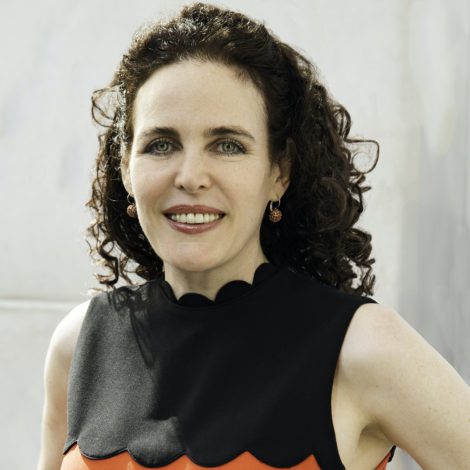

“I've been inspired by the submissions that we've received. I love seeing how teams are continuing to push the boundaries to redefine what the future of employee experience and operational excellence is, and will be, related to the digital workplace.”
Director and Team Leader for Associate Knowledge and Strategic Insights at Fidelity Investments
Contact us to apply to join DWG as a member and become part of a community of more than 900 digital workplace and intranet leaders and practitioners.
Apply for membershipBook a free one-to-one consultation to review the current state of your digital workplace and discover how DWG expert guidance can help you move forward with confidence.